Palisota hirsuta
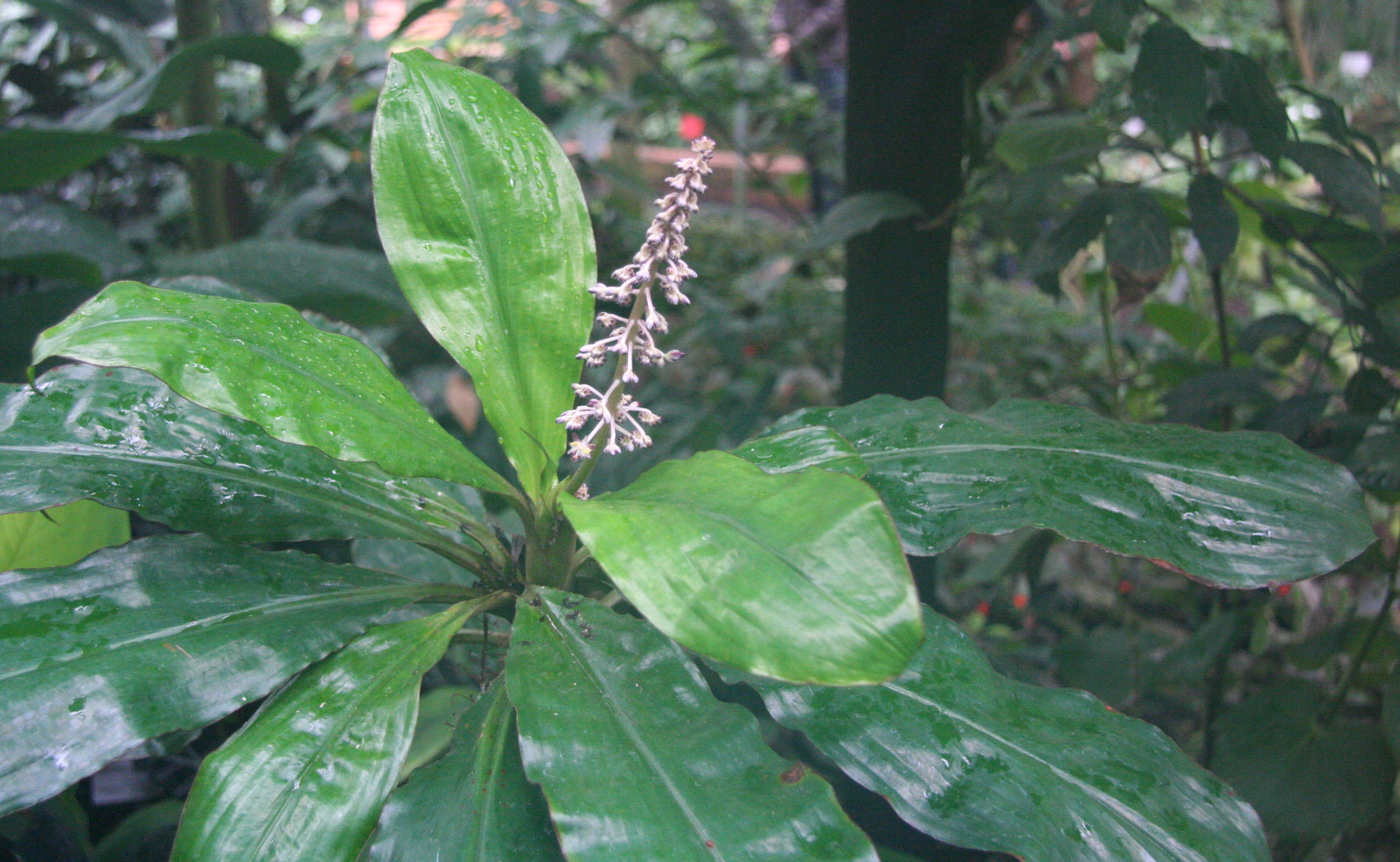
|
|
Palisota hirsuta Common Names: Hairy Palisota, African spiderwort Scientific
Classification Kingdom: Plantae Clade: Angiosperms Clade: Monocots Order: Commelinales Family: Commelinaceae Genus: Palisota Species: Palisota hirsuta Synonyms: Dracaena
hirsuta Thunb., Dianella triandra Wennberg, Palisota maclaudii Cornu, Palisota
thyrsostachya Mildbr., Palisota waibelii Mildbr. Morphological Description · Height: 0.3–1.5 m, occasionally taller in climbing forms · Stems: Stout, creeping or semi-climbing; young surfaces covered in
fine hairs · Leaves: Broad, lanceolate-obovate (10–38 cm × 4–12 cm), glossy, with
hairy margins and midrib beneath · Flowers: Small, white to purplish (5–8 mm), in loose panicles up to
25 cm long; open late afternoon · Fruits: Berry-like drupes (5–8 mm), turning red to purple when
mature; bird-dispersed Distribution and Habitat · Geographic Range: West and Central Africa (Nigeria, Ghana,
Liberia, Sierra Leone, Cameroon, DR Congo) · Elevation: 0–1,000 m above sea level · Soils: Fertile, moist, loamy soils (pH 5.0–6.5) · Habitat: Rainforest understories, shaded woodlands, riverbanks Medicinal Properties · Anti-inflammatory: Ethanol root extract reduced
carrageenan-induced edema and improved pain response in animal models
(Boakye-Gyasi et al., 2008). · Antinociceptive (Pain Relief): Leaf extract demonstrated significant
analgesic effects across tail-withdrawal, writhing, and formalin tests (Woode
et al., 2009). · Anti-arthritic: Leaf extract suppressed Freund’s
adjuvant-induced arthritis in rats, supporting use for swollen joints (Woode et
al., 2009). · Neuropathic Pain: Ethanolic leaf extract reduced
vincristine-induced neuropathic pain, comparable to gabapentin (Boakye-Gyasi et
al., 2014). · Anxiolytic & Antidepressant-like: Behavioral tests indicate central nervous
system activity influencing anxiety and mood (Boakye-Gyasi et al., 2010). ⚠ Toxicity Profile: No severe toxicity reported at tested laboratory
doses. Sub-acute studies showed normal hematological and biochemical values.
However, high-dose and long-term safety are not fully established. Avoid use
during pregnancy and in young children pending further safety research. Additional Information · Ornamental: Commonly cultivated in rainforest garden landscapes · Cultural Significance: Used in Yoruba cleansing and protection
rituals · Ecological Role: Provides understory ground cover and
supports bird seed dispersal References
External Links More Pictures |
|
| Compounds of Palisota hirsuta |
|
| References |