Adansonia digitata
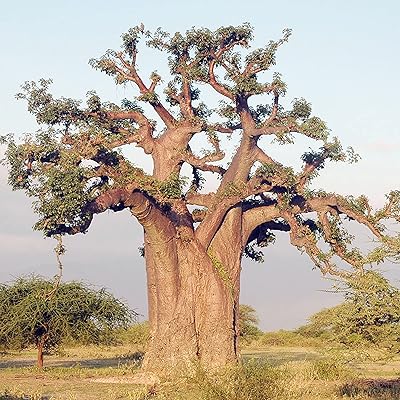
|
|
Adansonia digitata Common Names: African baobab, baobab, monkey-bread
tree, upside-down tree Scientific
Classification Kingdom: Plantae Clade: Tracheophytes Clade: Angiosperms Clade: Eudicots Clade: Rosids Order: Malvales Family: Malvaceae Subfamily: Bombacoideae Genus: Adansonia Species: Adansonia digitata L. Synonyms: Adansonia
bahobab L.; Adansonia baobab Gaertn.; Adansonia integrifolia Raf.; Adansonia
sphaerocarpa A.Chev.; Adansonia sulcata A.Chev. Morphological Description Adansonia digitata is a
massive, deciduous, pachycaul tree characterized by its swollen trunk adapted
for water storage. Individuals may live for over a millennium, making the
species one of the longest-lived angiosperm trees. · Height: Typically 5–25 m, occasionally taller in favorable
conditions · Trunk: Extremely thick, often exceeding 10 m in circumference,
smooth to fibrous grey bark · Leaves: Palmately compound with 5–7 leaflets; shed during dry season · Flowers: Large, white, pendulous, bat-pollinated, opening at dusk · Fruit: Woody indehiscent capsule with dry acidic pulp surrounding
numerous seeds Distribution and Habitat Native to sub-Saharan
Africa and parts of the southern Arabian Peninsula, Adansonia digitata occurs
predominantly in hot, semi-arid savannas and dry woodlands. · Altitude range generally from sea level to 1,500
m · Prefers well-drained sandy or loamy soils · Highly drought tolerant but sensitive to frost
and prolonged waterlogging Ethnopharmacology · Antioxidant: Fruit pulp and leaf extracts show strong radical scavenging
activity in DPPH, ABTS, and FRAP assays, attributed to high polyphenol and
vitamin C content · Antidiabetic: Human randomized controlled trials demonstrate reduced
postprandial glycemia following ingestion of aqueous baobab extract · Anti-inflammatory: Fruit pulp and seed extracts significantly
reduce carrageenan-induced edema in experimental models · Antimicrobial: Leaf and pulp extracts exhibit inhibitory activity against
several Gram-positive and Gram-negative bacteria ⚠ Safety and Toxicity: Baobab fruit pulp is authorized as a novel food
ingredient in the European Union and is generally regarded as safe when
consumed traditionally. However, crude seed oil may contain cyclopropenoid
fatty acids, which require processing controls to reduce potential health
risks. Additional Uses · Nutrition: Pulp is rich in vitamin C, calcium, potassium, and dietary
fiber · Traditional food: Leaves used as vegetables or dried powders
in soups · Craft and fiber: Bark fibers used for ropes, mats, and nets References
External Links More Pictures
|
|
| Compounds of Adansonia digitata |
|
| References |
