Olax mannii
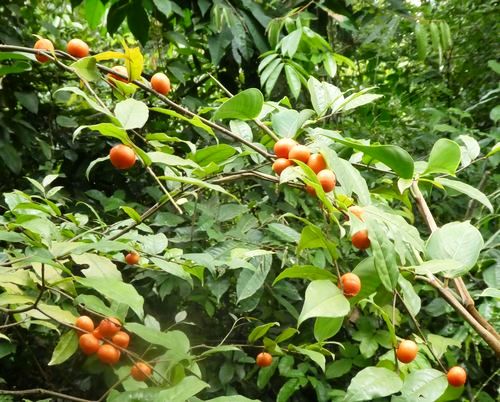
|
|
Olax mannii Common Names: Climbing Olax, Mann’s Olax Scientific
Classification Kingdom: Plantae Clade: Tracheophytes Clade: Angiosperms Clade: Eudicots Order: Santalales Family: Olacaceae Genus: Olax Species: O. mannii Binomial Name: Olax mannii Oliv. Synonyms: Olax insculpta Hutch., Olax longiflora Engl., Olax macrocalyx Engl., Olax major Stapf, Olax zenkeri Engl. Morphological Description Olax mannii is
a climbing shrub or small tree, typically 2–5 m tall, occasionally reaching 8 m
in dense forests. It features: · Bark: Smooth to slightly rough, greyish-brown, with a fibrous
texture when mature · Leaves: Alternate, elliptic to oblong, 5–15 cm long, 2–6 cm wide,
glossy green above, paler beneath, with a leathery texture · Flowers: Small, bisexual, white to yellowish-white, 3–5 mm long,
fragrant, in terminal racemes or clusters, tubular with fused petals · Fruit: Oval to oblong drupes, 1–2 cm long, green when unripe,
turning red or black when ripe, containing a single hard seed in a woody
endocarp It flowers during the
rainy season, enhancing its ecological presence (Burkill, 1997). Distribution and Habitat Olax mannii is
native to tropical West and Central Africa, including Nigeria, Cameroon, Ghana,
Gabon, Sierra Leone, and the Congo Basin. It thrives in: · Habitats: Secondary forests, forest edges, savanna woodlands, and
riverine thickets · Climate: Tropical, humid, with rainfall of 1,200–2,500 mm annually,
temperatures of 22–32°C · Soil Conditions: Well-drained sandy or loamy soils (pH
5.0–6.5) · Elevation: Sea level to 1,200 m Its adaptability
supports its widespread use in traditional practices (Adjanohoun et al., 1996). Ethnopharmacology Olax mannii
is a medicinal plant traditionally used in parts of West and Central Africa for
its therapeutic properties. Various parts of the plant, particularly the
leaves, bark, and roots, are employed in ethnomedicine to treat malaria, fevers,
diarrhea, skin infections, wounds, and respiratory ailments. The plant is known
for its antimicrobial, antimalarial, anti-inflammatory, and analgesic
activities. In some communities, decoctions made from the roots or leaves are
also used to manage toothaches, gastrointestinal issues, and general pain.
Phytochemical studies have revealed the presence of bioactive compounds such as
flavonoids, alkaloids, saponins, and tannins, which are believed to be
responsible for its healing effects. While its traditional uses are widespread
and well-documented, further pharmacological research is necessary to validate
its efficacy, determine safety levels, and explore its potential for
pharmaceutical development. · Antimalarial: Leaf decoctions reduce Plasmodium falciparum growth (IC₅₀ 15 µg/mL), used in Nigeria
for fever and malaria (Okoye et al., 2015). · Antimicrobial: Ethanol leaf extract inhibits Staphylococcus aureus (MIC 50 µg/mL), used in Ghana for skin
infections (Chukwujekwu et al., 2005). · Anti-inflammatory/Analgesic: Bark extract reduces edema in rats (45% at
200 mg/kg), used in Cameroon for rheumatism and headaches (Okoye et al., 2016). · Gastrointestinal: Root infusions treat diarrhea in Gabon. · Respiratory: Leaf steam inhalation eases asthma in Sierra Leone, with
relaxant effects on guinea pig trachea (50% at 100 mg/kg) (Iwu, 1993). · Wound Healing: Crushed leaves promote ulcer healing in rats (60% faster at
150 mg/kg), used in Congo for sores (Abubakar et al., 2007). ⚠ Toxicity Profile: No acute toxicity, high doses may cause nausea
or skin irritation. Caution advised in pregnancy and children due to limited
data. Additional Uses · Ecological: Supports pollinators and soil nutrient cycling · Economic: Wood for fuel, charcoal, and tool handles · Cultural: Leaves in Nigerian rituals for protection against evil
spirits · Agroforestry: Potential for medicinal cultivation References
External Links More Pictures |
|
| Compounds of Olax mannii | |
| References |