Vitex simplicifolia
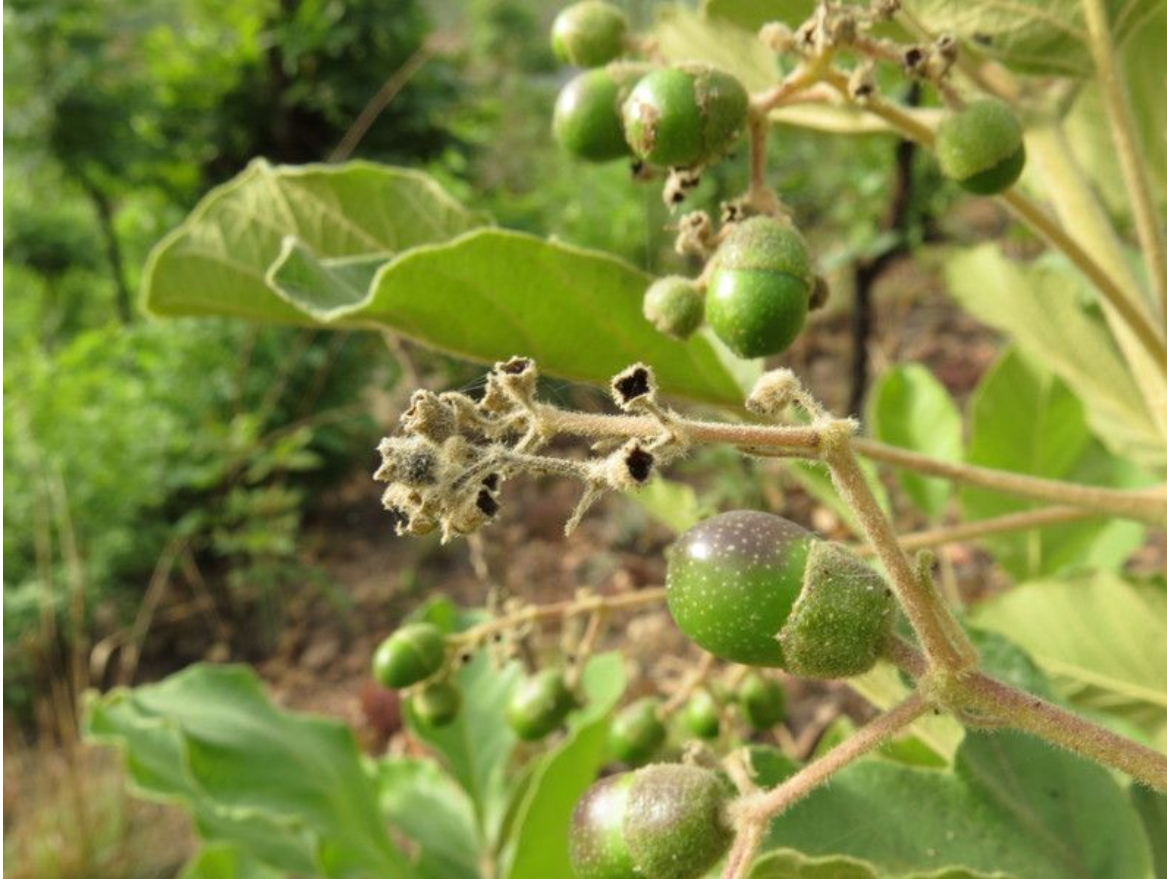
|
|
Vitex simplicifolia Common Names: Bush Vitex, Simple-leaved Chaste Tree Scientific Classification Kingdom: Plantae Clade: Tracheophytes Clade: Angiosperms Clade: Eudicots Order: Lamiales Family: Lamiaceae Genus: Vitex Species: V. simplicifolia Binomial Name: Vitex simplicifolia Oliv. Synonyms: Vitex madiensis Oliv. subsp. madiensis, Vitex vogelii Baker Morphological Description Vitex simplicifolia is a sprawling shrub or small tree, typically 1–3 m tall,
occasionally reaching 5 m in favorable conditions. It features: · Bark: Smooth, greyish-brown, becoming fissured with age · Leaves: Simple, opposite, lanceolate to ovate, 2–6.5 cm long, 1–4.5
cm wide, strongly aromatic when crushed, with a velvety texture · Flowers: Small, lilac to pale purple, 5–7 mm long, in dense axillary
cymes or panicles, blooming in the rainy season · Fruit: Small, reddish-purple drupes, 4–6 mm in diameter, resembling
cherries, containing 1–4 seeds The aromatic leaves and
vibrant fruits distinguish it in its habitat (Irvine, 1961). Distribution and Habitat Vitex simplicifolia is native to tropical and subtropical Africa, spanning
Nigeria, Cameroon, Gabon, Mali, Burkina Faso, and parts of East Africa (e.g.,
Uganda). It thrives in: · Habitats: Savannas, open woodlands, forest margins, and disturbed
areas · Climate: Warm, semi-arid to humid, with rainfall of 700–1,500 mm annually,
temperatures of 20–35°C · Soil Conditions: Well-drained sandy or loamy soils (pH
5.5–7.0) · Elevation: Sea level to 1,500 m Its resilience aids its
ecological role across diverse landscapes (Keay, 1989). Ethnopharmacology Vitex simplicifolia is a medicinal plant traditionally used in various parts of
Africa for its wide range of healing properties. Different parts of the plant, especially
the leaves, bark, and roots, are employed in treating malaria, fevers,
gastrointestinal disorders, rheumatism, menstrual issues, and skin diseases.
The plant exhibits antimalarial, anti-inflammatory, analgesic, antimicrobial,
and antioxidant activities. It is also used in some regions as a fertility
enhancer and for managing sexual health concerns. Phytochemical screenings have
identified compounds such as flavonoids, alkaloids, terpenoids, and saponins,
which are believed to be responsible for its medicinal effects. Despite its
extensive use in traditional medicine, further pharmacological and clinical
research is needed to confirm its efficacy, safety, and potential for broader
therapeutic applications. · Analgesic: Leaf decoctions reduce pain, used in Nigeria for headaches · Anti-inflammatory: Ethanol extract inhibits paw edema in rats
(40% at 300 mg/kg), used in Mali for swelling (Diarra et al., 2015). · Antimicrobial: used in Cameroon for wound infections · Antimalarial: Bark infusions used in Burkina Faso for malaria · Respiratory Relief: Leaf tea eases cough in Guinea · Antirheumatic: Root poultices reduce joint pain in rats (35% at 250 mg/kg),
used in Nigeria for rheumatism (Wambugu et al., 2011). · Antitrypanosomal: Leaf extract reduces trypanosome load in
mice (60% at 400 mg/kg), used in trypanosomiasis-endemic areas (Nwodo et al.,
2015). ⚠ Toxicity Profile: No acute toxicity at 2,000 mg/kg in rats (LD₅₀
> 2,000 mg/kg); sub-chronic use may cause mild gastrointestinal upset.
Traditional doses are generally safe, but consultation with practitioners is
advised (Nwodo et al., 2015). Additional Uses · Culinary: Seeds roasted as snacks or ground into flour in West Africa · Ecological: Stabilizes soil in savannas, supports pollinators · Economic: Leaves and bark sold in local markets for medicine · Cultural: Used in Dogon rituals for purification References
External Links More Pictures |
|
| Compounds of Vitex simplicifolia | |
| References | Murtala
Muhammad, Etal. (2023). Phytochemical
analysis of Nigerian medicinal plants. NMPP-DB Project, Department of Biochemistry,
Kano University of Science and Technology, Wudil |