Tamarindus indica
|
|
Tamarindus indica Common Names: Tamarind, tamarin tree, Indian date,
tamarindo Scientific
Classification Kingdom: Plantae Clade: Tracheophytes Clade: Angiosperms Clade: Eudicots Order: Fabales Family: Fabaceae Genus: Tamarindus Species: T. indica Binomial Name: Tamarindus indica L. Synonyms: Tamarindus erythraeus Mattei, Tamarindus occidentalis Gaertn., Tamarindus officinalis Hook., Tamarindus umbrosa Salisb. Morphological Description Tamarindus indica, commonly known as tamarind, is a medium to large evergreen tree
typically growing to heights of 15–25 meters, with exceptional specimens
reaching up to 30 meters (Kew Science, 2024). The short, stout trunk, often 1–2
meters in diameter, is covered with smooth, grayish-brown bark that fissures
and darkens with age (Tropical Plants Database, 2024). The dense, spreading
crown is supported by drooping branches, bearing bright green, pinnately
compound leaves, 5–15 cm long, with 10–20 pairs of oblong leaflets, each 1–3 cm
long and 0.5–1 cm wide (Burkill, 2000). Flowers are small, 1–2 cm long, yellow
with red streaks, arranged in lax racemes, blooming from late spring to early
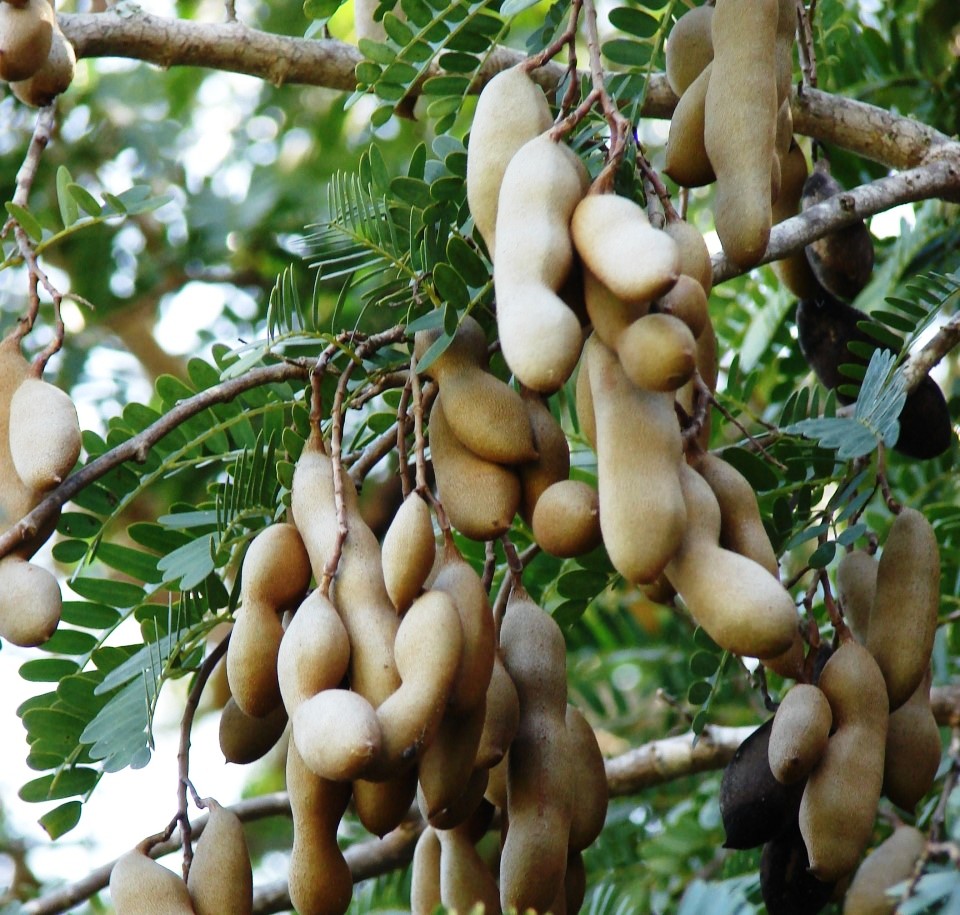
summer. The fruits are brown, pod-like legumes, 5–20 cm long and 2–3 cm wide,
containing 1–12 seeds embedded in a sweet, tangy, fibrous pulp that ripens from
green to a sticky brown paste (Bhadoriya et al., 2011). Distribution and Habitat Native to tropical
Africa, likely originating in East Africa (e.g., Sudan, Ethiopia), Tamarindus indica has been naturalized across South Asia
(e.g., India, Pakistan), Southeast Asia (e.g., Thailand, Philippines), the
Caribbean, Central and South America, and parts of northern Australia (Kew
Science, 2024; CABI, 2024). It thrives in diverse habitats, including savannas,
woodlands, riverbanks, and coastal areas, preferring well-drained, sandy or
loamy soils with a pH of 4.5–7.5 (Tropical Plants Database, 2024). The tree
tolerates drought and heat, growing in climates with annual rainfall of
500–1,500 mm and temperatures of 20–35°C, at elevations from sea level to 1,500
meters (PlantZAfrica, 2013). Its resilience makes it a common agroforestry
species in semi-arid regions. Ethnopharmacology Tamarindus indica is a cornerstone of traditional medicine across Africa,
Asia, and Latin America, owing to its rich phytochemical profile, including
phenolic acids (e.g., tartaric, malic), flavonoids, tannins, and triterpenoids
(Nguyen et al., 2016). Below are key ethnopharmacological uses supported by
research: · Laxative and Digestive Aid: In Nigeria, pulp is used for constipation
and diarrhea; its high malic (8–18%) and tartaric acid (5–10%) content
stimulates bowel movement, with studies showing a 50% increase in stool
frequency in rats at 80 mg/kg (Maiti et al., 2004). · Antioxidant Activity: In India, fruit pulp combats oxidative
stress. · Anti-inflammatory and Fever Relief: In Ghana, leaf infusions treat fevers;
methanol extracts reduced carrageenan-induced edema in rats by 55% at 200
mg/kg, due to flavonoids (Komakech et al., 2019). · Antimicrobial Properties: In Ethiopia, seed extracts fight
infections. · Anti-diabetic Effects: In Mali, seed decoctions manage diabetes;
aqueous extracts (80 mg/kg) lowered fasting blood glucose by 35% in
streptozotocin-induced diabetic rats after 14 days, enhancing glycogen storage
(Maiti et al., 2004). · Cholesterol-Lowering: In Kenya, pulp reduces cholesterol; A
clinical study involving human participants who consumed dried and pulverized
tamarind fruit pulp at a dose of 15 mg/kg body weight observed significant
reductions in total cholesterol and LDL-C levels. This suggests that tamarind
may have practical applications in managing cholesterol levels in humans (Iftekhar,
et al., 2006). ⚠ Toxicity Profile: Tamarindus indica is generally safe for culinary and
moderate medicinal use, with no significant toxicity reported in humans at
typical doses. Overconsumption of pulp may lead to laxative effects or enamel
erosion from acidity, and its lead absorption potential from contaminated soils
warrants caution (Tropical Plants Database, 2024). Additional Uses · Culinary Applications: The tangy pulp, with 30–50% edible
portion, is used in sauces, chutneys, beverages, and desserts worldwide,
notably in Indian tamarind rice and Mexican aguas frescas · Timber and Industry: The reddish-brown heartwood, with a
density of 850–900 kg/m³, is prized for furniture, carvings, and fuel, while
seed oil is used in varnishes and paints (Burkill, 2000). · Ecological and Cultural: It provides shade and fodder in
agroforestry, and its acidic pulp polishes brass and copper in traditional
practices across Africa and India (Tropical Plants Database, 2024). References
External Links
More Pictures |
|
| Compounds of Tamarindus indica |
|
| References |