Gymnema sylvestre
|
|
Gymnema sylvestre Common Names: Gymnema,
gurmar, sugar destroyer, periploca of the woods Scientific
Classification Kingdom: Plantae Clade: Angiosperms Clade: Eudicots Order: Gentianales Family: Apocynaceae Genus: Gymnema Species: Gymnema sylvestre (Retz.) R.Br. ex Sm. Synonyms: Apocynum alterniflorum Lour.;
Marsdenia sylvestris (Retz.) P.I.Forst. (Plants of the World Online, n.d.;
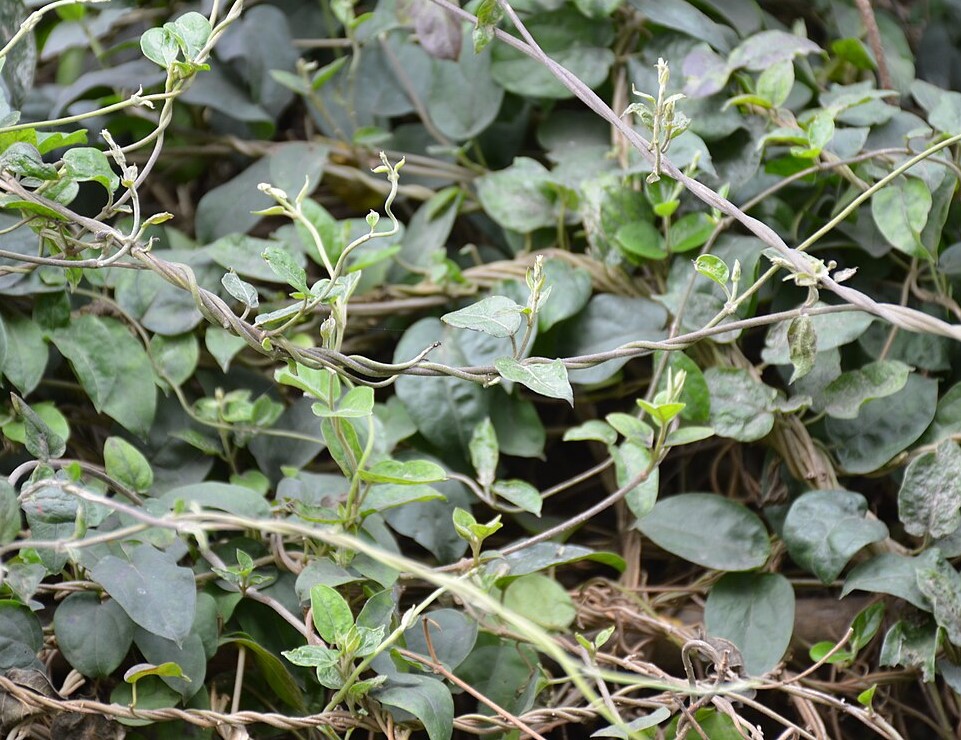
World Flora Online, n.d.). Morphological Description Gymnema sylvestre is a perennial woody climber or twining vine
that typically scrambles over shrubs and small trees. Leaves are opposite,
ovate to elliptic, with entire margins and a softly pubescent surface. Flowers
are small and yellowish to greenish, borne in axillary or lateral cymes. Fruits
are paired follicles containing numerous flattened seeds with silky hairs that
promote wind dispersal. The leaf is the principal medicinal organ and is
distinctive for producing a temporary suppression of sweet taste perception
after oral contact, a property widely referenced in Ayurvedic medicine and
modern taste research (Kanetkar et al., 2007; Sanematsu et al., 2014). Distribution and Habitat Gymnema sylvestre has a broad paleotropical range and is recorded
as native across many parts of Asia and large areas of Africa, with additional
native occurrences documented for Australia. It occurs in deciduous and
semi-evergreen forests, scrublands, riverine vegetation, and secondary growth,
commonly climbing along forest margins and disturbed woody vegetation. Regional
occurrence lists compiled by Kew indicate presence in multiple countries across
South and Southeast Asia and extensive Sahelian and sub-Sahelian Africa,
consistent with its wide ecological tolerance (Plants of the World Online,
n.d.). Ethnopharmacology Gymnema sylvestre is a well-known medicinal species in South Asian
traditional medicine. Traditional preparation methods include chewing fresh
leaves, powders, teas, and decoctions. The ethnomedical reputation of the plant
is closely linked to sweet taste suppression and the cultural practice of using
leaves to reduce the desire for sugary foods, reflecting the vernacular name
gurmar, meaning sugar destroyer. Beyond metabolic indications, traditional uses
reported in scientific syntheses include management of dyslipidemia, obesity,
arthritis-like pain, gastrointestinal complaints such as dysentery, and general
wellbeing practices (Kanetkar et al., 2007; LiverTox, 2024; Tiwari et al.,
2014). · Sweet
taste suppression through chewing leaves or oral preparations used shortly
before meals or sweet foods (Sanematsu et al., 2014; Turner et al., 2020). · Adjunct
use for type 2 diabetes mellitus and glycemic control in traditional and
complementary practice (Baskaran et al., 1990; Devangan et al., 2021). · Appetite
and sugar craving management, often framed as dietary support rather than sole
therapy (Turner et al., 2020; Turner et al., 2022). · Broader
folk uses reported for metabolic imbalance, dyslipidemia, obesity-related
complaints, dysentery, and malaria-like febrile illness in some traditions
(LiverTox, 2024). A systematic review and meta-analysis evaluating Gymnema sylvestre supplementation in type 2 diabetes concluded that supplementation improves markers of glycemic control and lipid profiles, while emphasizing heterogeneity in preparations and study designs and the need for well-standardized trials (Devangan et al., 2021). A randomized controlled study evaluating a 14-day intervention that included a mint delivering 4 mg of Gymnema sylvestre (75% gymnemic acids) found reduced chocolate intake and reduced pleasantness ratings for sweet foods in a laboratory setting, with no evidence of habituation to the taste-blocking effect over the intervention period (Turner et al., 2022). Additional Uses · Nutraceuticals: Incorporated
into dietary supplements, sweet-blocking products, and functional foods
marketed for sugar craving reduction and blood glucose support (LiverTox, 2024;
Turner et al., 2022). · Research applications: Model plant for studying sweet taste modulation, food reward responses, and dietary behavior (Sanematsu et al., 2014; Turner et al., 2022). ⚠ Safety, Toxicity: Gymnema sylvestre appears to be well
tolerated in short-term studies, but people using diabetes medications should
use caution because combined effects may increase the risk of hypoglycemia.
According to LiverTox, there are rare, isolated reports of liver injury
associated with products containing Gymnema, although determining causality is
difficult due to the presence of other ingredients and possible contaminants.
LiverTox therefore categorizes Gymnema as a possible but uncommon cause of
clinically significant liver injury (LiverTox, 2024). In addition, a published
case report describes suspected drug-induced liver injury in a patient taking
Gymnema sylvestre for diabetes, highlighting the need for monitoring and
careful selection of products (Shiyovich et al., 2010) References
External Links More Pictures |
|
| Compounds of Gymnema sylvestre | |
| References | Murtala Muhammad, Etal. (2023). Phytochemical analysis of Nigerian medicinal plants. NMPP-DB
Project, Department of Biochemistry, Kano University of Science and Technology,
Wudil |