Piliostigma reticulatum
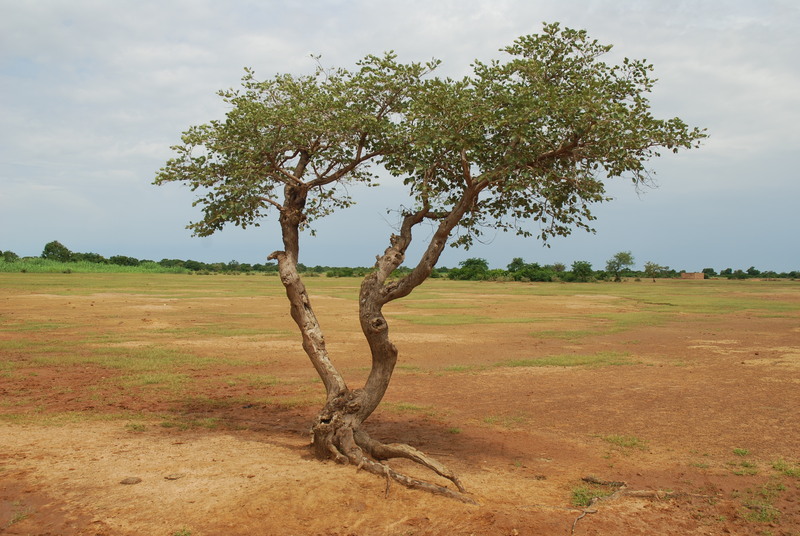
|
|
Piliostigma reticulatum Common Names: Camel’s foot, Monkey bread, Leather tree Scientific
Classification Kingdom: Plantae Clade: Tracheophytes Clade: Angiosperms Clade: Eudicots Clade: Rosids Order: Fabales Family: Fabaceae Subfamily: Cercidoideae Tribe: Bauhinieae Genus: Piliostigma Species: P. reticulatum Binomial Name: Piliostigma reticulatum (DC.) Hochst. Synonyms: Elayuna biloba Raf., Locellaria reticulata Welw., Pileostigma reticulatum Hochst. (orth. var.), Bauhinia reticulata DC. Morphological Description Piliostigma reticulatum is a deciduous shrub or small tree, typically growing to
5–10 m in height, occasionally reaching 15 m in optimal conditions. It is
characterized by: · Stem: Short, often crooked bole (up to 30 cm in diameter), with
deeply fissured, grey to brown outer bark and pinkish-red inner bark · Leaves: Alternate, bilobed (5–12 cm long, 4–18 cm wide), cordate or
rounded at the base, greyish-green, coriaceous, with 8–11 palmate veins · Flowers: Small, white to pale pink, borne in axillary or terminal
racemes (5–10 cm long), with a sweet fragrance · Fruit: Woody pods (10–20 cm long, 3–5 cm wide), dark brown,
indehiscent, containing 4–8 flat, brown seeds The bilobed leaves
resemble a camel’s footprint, inspiring its common name, while its dense crown
provides shade in arid landscapes (Arbonnier, 2004). Distribution and Habitat Piliostigma reticulatum is widespread across the Sahel and Sudanian savanna zones of
West Africa, from Senegal and Mauritania eastward to Sudan, with introductions
in Mozambique. It occurs in: · Sahelian Savannas: Dry, sandy plains with annual rainfall of
200–600 mm · Sudanian Woodlands: Moist savannas with rainfall of 600–1,200
mm · Cropped Fields: Common in agroforestry systems, enhancing
soil fertility It thrives in arid to
semi-arid climates on well-drained, sandy or loamy soils (pH 5.5–7.5),
tolerating temperatures of 20–40°C and performing hydraulic redistribution to
lift water from deeper soil layers (Bright et al., 2017). Ethnopharmacology Piliostigma reticulatum is a cornerstone of traditional medicine in West Africa,
supported by ethnopharmacological studies: · Antidiarrheal: In Côte d’Ivoire, stem bark decoctions treat diarrhea.
Ethanol extracts (500–1000 mg/kg) reduce defecation frequency by 50–70% in
castor oil-induced diarrhea in rats, linked to tannins and flavonoids (Dosso K
et al., 2011). · Wound Healing: In Burkina Faso, bark poultices aid wound closure. Extracts
promote collagen synthesis and fibroblast activity in vitro, aligning with
antiseptic properties (Ouédraogo et al., 2016). · Antimicrobial: In Senegal, leaf infusions combat infections.
Dichloromethane fractions inhibit Staphylococcus aureus (MIC 0.25 mg/mL) and Escherichia coli (MIC 0.5 mg/mL), due to flavonoids and
terpenoids (N'Guessan et al., 2015). · Anti-inflammatory: In Mali, leaf decoctions treat rheumatism.
Methanol extracts inhibit albumin denaturation by 60–80% at 100 μg/mL,
attributed to phenolic content (74.66 μg GAE/mL) (Boualam et al., 2021). · Anticonvulsant: In Cameroon, root extracts manage
seizures. Ethanol extracts protect 62.5–100% of mice against
pentylenetetrazol-induced convulsions at 200 mg/kg (Ngo Bum et al., 2009). ⚠ Toxicity Profile: No acute toxicity is reported (LD₅₀ > 6,000
mg/kg in rats) for stem bark extracts, indicating safety at traditional doses.
However, chronic use lacks extensive study, and consultation with healthcare
providers is recommended (Dosso K et al., 2011). Additional Uses · Forage: Leaves and pods provide fodder, with 4.8 g protein/100 g
(Arbonnier, 2004) · Dyeing: Bark yields red dye, roots produce blue dye for textiles · Crafts: Fibrous bark used for baskets, mats, and tying materials · Ecological: Enhances soil carbon (31–105% increase) and nitrogen via
hydraulic lift (Yélémou et al., 2013) References
External Links More Pictures
|
|
| Compounds of Piliostigma reticulatum | |
| References |
