Eucalyptus maculata
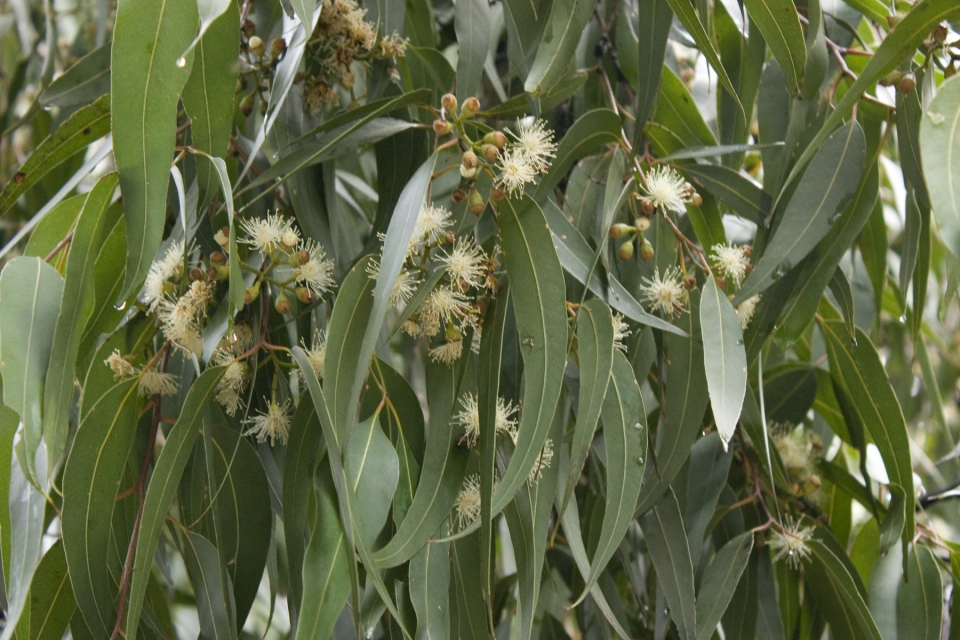
|
|
Corymbia maculata Common Name: Spotted gum Scientific
Classification Kingdom: Plantae Clade: Tracheophytes Clade: Angiosperms Clade: Eudicots Order: Myrtales Family: Myrtaceae Genus: Corymbia Species: C. maculata Synonyms: Eucalyptus
maculata Hook. Morphological Description Corymbia maculata,
commonly known as spotted gum, is a tall evergreen tree reaching 30–50 m in
height, occasionally up to 70 m in optimal conditions. Its distinctive features
include: · Bark: Smooth, mottled, shedding in patches to reveal cream, grey,
or brown hues, creating a spotted appearance · Leaves: Lanceolate, glossy green, 10–20 cm long, 1.5–4 cm wide,
aromatic when crushed, with prominent venation · Flowers: White to cream, 2 cm across, arranged in umbellasters of 3,
clustered in terminal panicles, blooming from winter to spring · Fruit: Woody, urn-shaped capsules, 1–1.5 cm long, containing small
seeds The tree forms a
lignotuber, aiding regrowth after fire or damage, and its straight trunk makes
it a prime timber species (Boland et al., 2006). Distribution and Habitat Native to eastern
Australia, Corymbia maculata occurs in coastal and subcoastal regions from
southern New South Wales (near Bega) to central Queensland (Taroom and Monto).
It is rare in Victoria, listed as threatened in its only natural occurrence
south of Buchan. The species thrives in: · Dry Sclerophyll Woodlands: On clay, shale, or volcanic soils (pH
5.0–6.5), with annual rainfall of 600–1,200 mm · Wet Sclerophyll Forests: In higher rainfall zones (up to 1,500 mm
annually), at elevations of 0–600 m · Cultivated Areas: Planted ornamentally in Australia, South
Africa, California, and parts of Africa with similar climates (e.g., Nigeria),
tolerating temperatures of 5–40°C Ethnopharmacology Corymbia maculata has
limited but significant traditional medicinal uses, primarily among Australian
Aboriginal communities, with some adoption in other regions.
Ethnopharmacological studies highlight: · Antiseptic and Wound Healing: Hot water leaf extracts are used as
antiseptics for wounds and infections. · Respiratory Ailments: Leaf infusions are inhaled or ingested to
relieve respiratory issues like colds and coughs, attributed to monoterpenes
(e.g., α-pinene, limonene) with expectorant properties (Lassak & McCarthy,
2011). · Bladder Infections: Gum (kino) from the bark is used in bush
medicine to treat bladder infections, · Anti-inflammatory: Leaf extracts (ethanol, 100 mg/kg) reduce
carrageenan-induced paw edema in rats by 35%, supporting use for rheumatism and
inflammation, linked to flavonoids and terpenoids (Perry & Selesho, 2022).
⚠ Toxicity Profile: Corymbia maculata is generally non-toxic to
humans at therapeutic doses. However, leaf essential oils are toxic if ingested
in large quantities (LD₅₀ 2,500 mg/kg in rats), potentially causing nausea,
dizziness, or respiratory distress. Topical use may cause skin sensitization in
some ndividuals due to 1,8-cineole. Internal use requires dilution and
professional guidance. No chronic toxicity data are available, so prolonged use
should be avoided, especially in pregnant or breastfeeding individuals (Perry,
2022). Additional Uses · Timber: The heartwood, with a density of 900–1,100 kg/m³, is hard,
durable, and termite-resistant, used for construction, flooring, decking, tool
handles, and marine structures (Boland et al., 2006). · Ecological Role: Flowers produce high-quality pollen,
supporting honey production (yield 20–40 kg/ha). The tree provides habitat for
koalas (leaves), birds, and insects (Australian Plants Society, 2017). · Ornamental: Planted in parks and rural landscapes for its attractive
bark and uniform growth, adaptable to Mediterranean and subtropical climates · Bioenergy: Wood chips are used for biomass energy, with a calorific
value of 18–20 MJ/kg, suitable for sustainable fuel production (Hill &
Johnson, 1995). References
External Links More Pictures |
|
| Compounds of Eucalyptus maculata | |
| References |