Allium sativum
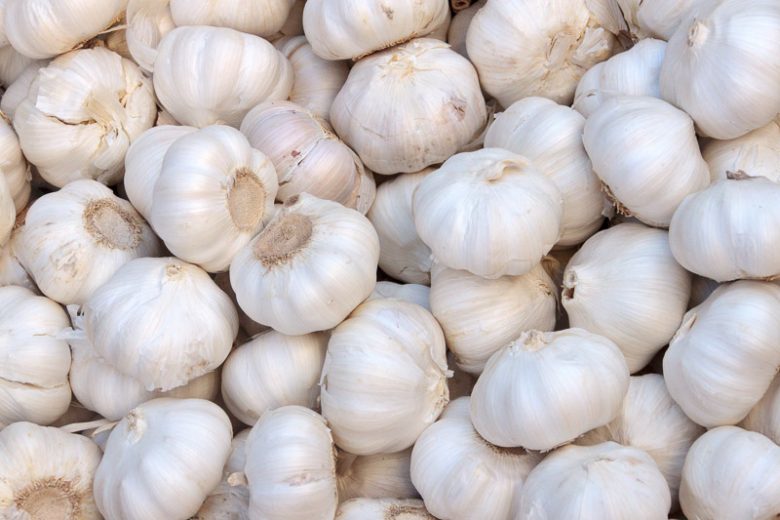
|
|
Allium sativum Common Names: Garlic, cultivated garlic Scientific
Classification Kingdom: Plantae Clade: Tracheophytes Clade: Angiosperms Clade: Monocots Order: Asparagales Family: Amaryllidaceae Subfamily: Allioideae Genus: Allium Species: Allium sativum L. Synonyms : Allium longicuspis Regel; Allium ophioscorodon Link; Allium pekinense Prokh. Morphological Description Allium sativum is
a perennial bulbous geophyte cultivated primarily for its compound bulb
(“head”) composed of multiple cloves. Many cultivated forms produce a flowering
stalk (scape) ending in an umbel that may contain both flowers and bulbils,
with fertility varying by cultivar group (World Flora Online, n.d.). · Bulb: Typically ovoid, segmented into cloves enclosed by papery
tunics; clove number and size vary by cultivar and growing conditions (World
Flora Online, n.d.). · Leaves: Linear to flat, produced from the basal plate; foliage is
often seasonal depending on cultivar and climate (World Flora Online, n.d.). · Scape and inflorescence: A leafless stalk (scape) may be present in
bolting types, with a terminal umbel that can contain flowers and bulbils
(World Flora Online, n.d.). · Reproduction in cultivation: Many cultivated garlic types are
propagated vegetatively by cloves, with reduced seed set common in domesticated
lineages (POWO, n.d.). Distribution and Habitat Plants of the World
Online records the native range of Allium sativum as Central Asia to northeastern Iran, with extensive
cultivation and naturalization worldwide (POWO, n.d.). Global biodiversity
portals document widespread occurrence records across continents, consistent
with long-term agricultural distribution (GBIF, n.d.). · Native range: Central Asia to northeastern Iran (POWO, n.d.). · Current distribution: Cultivated globally with widespread
introduced records (GBIF, n.d.). · Ecology in cultivation: Commonly grown in temperate to subtropical
zones; performance is influenced by cultivar type, photoperiod, and soil
drainage (POWO, n.d.). Ethnopharmacology Garlic is one of the
most widely used medicinal foods globally. WHO’s monograph describes
traditional use patterns for respiratory complaints, digestive disturbances,
and cardiovascular support, and summarizes evidence from pharmacological and
clinical studies (WHO, 1999). Modern evaluation frameworks also emphasize that
preparation type strongly influences bioactive composition and clinical
comparability (European Medicines Agency, 2017). · Alliin to allicin conversion: Crushing or chopping garlic activates
alliinase, converting alliin into allicin, which then forms additional organosulfur
compounds with differing stability and activity (Borlinghaus et al., 2014;
European Medicines Agency, 2017). · Mechanistic relevance: Allicin is a reactive sulfur species that
modifies thiol groups in proteins and glutathione, a mechanism linked to broad
biological activity including antimicrobial effects (Borlinghaus et al., 2014). · Broad-spectrum activity: A detailed review describes dose-dependent
inhibitory and microbicidal activity of allicin against bacteria and fungi,
including activity against resistant strains under laboratory conditions
(Borlinghaus et al., 2014). · Helicobacter pylori inhibition in vitro: In an in vitro study, allicin
inhibited H. pylori growth
at approximately 20–30 μg/mL (Ohta et al., 1999). ·
Clinical
translation note: Regulatory
assessments emphasize that antimicrobial clinical outcomes are inconsistent
across trials, partly due to instability of active constituents and variability
across preparations (European Medicines Agency, 2017; WHO, 1999). · Blood pressure reduction in hypertension: A dose-response randomized controlled
trial of aged garlic extract reported a significant reduction in mean systolic
blood pressure of 11.8 ± 5.4 mm Hg over 12 weeks in one treatment group
compared with placebo (Ried et al., 2013). · Lipid effects : A systematic review and meta-analysis
reported modest reductions in total cholesterol (mean difference −0.19 mmol/L)
and triacylglycerols (mean difference −0.11 mmol/L), with limited effects on LDL-C
or HDL-C in that analysis (Reinhart et al., 2009). · Regulatory interpretation: EMA’s assessment report summarizes
evidence suggesting potential benefit for lipid parameters and atherosclerosis
prevention, while stressing heterogeneity and standardization challenges across
products (European Medicines Agency, 2017). · Human platelet function trial: A randomized clinical trial comparing
garlic tablets to a cardioprotective aspirin dose reported that the
investigators could not determine a garlic dose equivalent to aspirin’s
antiplatelet effect using light transmittance aggregometry (Shafiekhani et al.,
2016). · Safety guidance: EMA and WHO documents describe reports of
effects on platelet aggregation and bleeding time, supporting caution with
anticoagulants, antiplatelet therapy, and perioperative use (European Medicines
Agency, 2017; WHO, 1999). · Mixed clinical evidence: WHO’s monograph summarizes that clinical
findings on blood glucose modulation are inconsistent across trials and may
depend on preparation and study context (WHO, 1999). ⚠ Safety, Toxicity: Gastrointestinal irritation and strong
breath/odor are commonly reported, particularly at higher intakes or
concentrated products (European Medicines Agency, 2017; WHO, 1999). Case
reports document chemical burns and irritant contact dermatitis after applying
garlic to the skin, especially under occlusion (Xu et al., 2014). EMA’s
assessment report highlights cautions around anticoagulants and antiplatelet
drugs due to bleeding-related signals in some contexts (European Medicines
Agency, 2017). In animals, ingestion of garlic and other Allium species can
cause Heinz body hemolytic anemia in cats and dogs, including from raw, cooked,
or concentrated forms (MSD Veterinary Manual, n.d.). Additional Uses · Culinary: A globally important spice and food ingredient used fresh,
dried, and processed in diverse cuisines (WHO, 1999). · Traditional medicine-food overlap: Often consumed as both a food and a home
remedy, which complicates dosage comparisons in clinical research (European
Medicines Agency, 2017; WHO, 1999). · Agronomic diversity: Cultivar groups vary in bolting behavior,
bulb structure, and adaptation, influencing both yield and phytochemical
profiles (World Flora Online, n.d.). References
External Links More Pictures
|
|
| Compounds of Allium sativum |
|
| References | M.E., Okposio, Emere, M.C., Dibal, D.M., Yilwa, V.M., Emmanuel, R.T, Dede, P.M., Abba, M, Mahmud, A., and Zubairu, A.A. 2025. “Gas Chromatographic-Mass Spectrometric Analysis of Chemical Components of Oils from Allium Sativum L., and Allium Cepa L”. International Journal of Biochemistry Research & Review 34 (4):259-64. https://doi.org/10.9734/ijbcrr/2025/v34i41019. Murtala Muhammad, Etal. (2023). Phytochemical analysis of Nigerian medicinal plants. NMPP-DB Project, Department of Biochemistry, Kano University of Science and Technology, Wudil |

