Physostigma venenosum
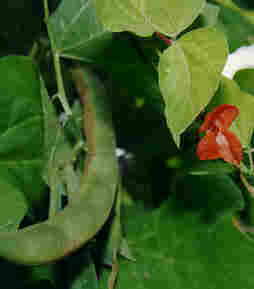
|
|
Physostigma venenosum Common Names: Calabar bean, Ordeal bean, Chopnut Scientific
Classification Kingdom: Plantae Clade: Tracheophytes Clade: Angiosperms Clade: Eudicots Clade: Rosids Order: Fabales Family: Fabaceae Genus: Physostigma Species: P. venenosum Synonyms: Physostigma venenosum Balf., Physostigma
cylindrospermum Welw. ex Baker Morphological Description Physostigma venenosum is a robust, herbaceous, climbing perennial legume, reaching
heights of 10–15 m, occasionally up to 20 m in optimal conditions. Its
distinguishing features include: · Stem: Woody at the base, up to 5 cm in diameter, becoming twining
and herbaceous above, with a smooth, brownish bark · Leaves: Pinnately trifoliate, with leaflets ovate to elliptic, 5–15
cm long, glossy dark green, and acute at the apex · Flowers: Large (20–25 mm), pale pink to purplish, arranged in
pendulous, fascicled racemes on axillary peduncles, with Lillia, heavily veined · Fruit: Pods 15–18 cm long, dark brown, containing 2–3 kidney-shaped
seeds, 2–3 cm long, chocolate-brown, with a hard, glossy surface. Distribution and Habitat Physostigma venenosum is endemic to tropical West Africa, primarily Nigeria,
Cameroon, Ghana, and Guinea, thriving in humid, lowland forests and along
riverbanks (altitude 0–500 m). It prefers: · Soils: Well-drained, loamy or sandy soils (pH 5.5–6.5) · Climate: High humidity (70–90%) and temperatures of 25–35°C, with
annual rainfall of 1,500–2,500 mm · Habitats: Edges of rainforests, secondary forests, and stream banks It is most abundant
during the rainy season (June–September) in Nigeria’s Cross River region
(Useful Tropical Plants, n.d.). Ethnopharmacology and Medicinal Properties Physostigma venenosum has a dual legacy as a toxic ordeal poison and a source of
therapeutic alkaloids, notably physostigmine: · Traditional Use - Ordeal Poison: In Nigeria’s Old Calabar, the Efik people
used the bean (Eseré) in witchcraft trials; survival indicated innocence. · Eye Disorders: In Ghana, seed decoctions treated conjunctivitis;
physostigmine constricts pupils, reducing intraocular pressure by 30% at 0.5%
concentration (DrugBank, 2024). · Glaucoma: Physostigmine (0.25–1% solution) enhances aqueous humor
outflow, lowering pressure in open-angle glaucoma (Kanski & Bowling, 2016). · Myasthenia Gravis: Increases acetylcholine levels, improving
muscle strength by 25–40% at 1–2 mg doses (Drachman, 2016). · Anticholinergic Syndrome: Reverses delirium and tachycardia from
atropine poisoning at 0.5–2 mg IV (Burns et al., 2019). · Delayed Gastric Emptying: Stimulates peristalsis, reducing emptying
time. · Antioxidant: Seed extracts scavenged DPPH radicals by 70% at 100 μg/ml,
linked to flavonoids (Umoren & Essien, 2019). ⚠ Toxicity Profile: The bean’s physostigmine inhibits
acetylcholinesterase, mimicking nerve gas effects: salivation, seizures, and
respiratory failure. Lethal dose in humans is ~10–20 mg; atropine (1–2 mg IV)
counters effects if <3.5 times the fatal dose is ingested (Fraser, 1867). Additional Uses · Nutrition: Seeds contain 70.88% protein and 3.21% lipids but are toxic
raw (Umoren & Essien, 2019). · Cultural: Used in dueling rituals in Nigeria, splitting a bean between
adversaries (Wikipedia, 2024). · Historical: Introduced to Britain in 1840; effects studied by Fraser in
1863 (Fraser, 1867). References
External Links More Pictures |
|
| Compounds of Physostigma venenosum | |
| References |