Colchicine
| Compound Structure: |
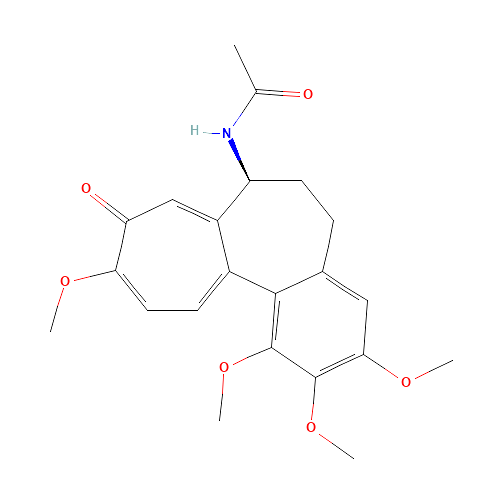
|
||||||||||||||||||||||||||||||||||||
|---|---|---|---|---|---|---|---|---|---|---|---|---|---|---|---|---|---|---|---|---|---|---|---|---|---|---|---|---|---|---|---|---|---|---|---|---|---|
| Synonyms: | colchicine , Colchisol, Colchineos, Colchicinum | ||||||||||||||||||||||||||||||||||||
| Compound ID: | NMPC-1673 | ||||||||||||||||||||||||||||||||||||
| PubChem ID: | |||||||||||||||||||||||||||||||||||||
| Molecular Formula: | C22H25NO6 | ||||||||||||||||||||||||||||||||||||
| Canonical SMILES: | CC(=O)N[C@H]1CCC2=CC(=C(C(=C2C3=CC=C(C(=O)C=C13)OC)OC)OC)OC | ||||||||||||||||||||||||||||||||||||
| InChIKey: | IAKHMKGGTNLKSZ-INIZCTEOSA-N | ||||||||||||||||||||||||||||||||||||
| About the compound: | Colchicine (PubChem CID 6167) is a naturally occurring tricyclic alkaloid obtained from the plant Colchicum autumnale (autumn crocus) with the molecular formula C₂₂H₂₅NO₆ and a molecular weight of about 399.4 g/mol. It appears as a pale yellow crystalline solid, is sparingly soluble in water, and is sensitive to light. Biologically, colchicine binds to tubulin and inhibits microtubule polymerization, thereby blocking mitosis and suppressing neutrophil activity, which explains its strong anti-inflammatory effect. Clinically, it is widely used in the treatment and prevention of gout and in familial Mediterranean fever. However, colchicine has a narrow therapeutic index, meaning that small dosing errors or drug interactions (especially involving CYP3A4 or P-glycoprotein inhibitors) can lead to serious toxicity. |
||||||||||||||||||||||||||||||||||||
| Properties: |
|
||||||||||||||||||||||||||||||||||||
| Source Species: |
Physostigma venenosum |