Massularia acuminata
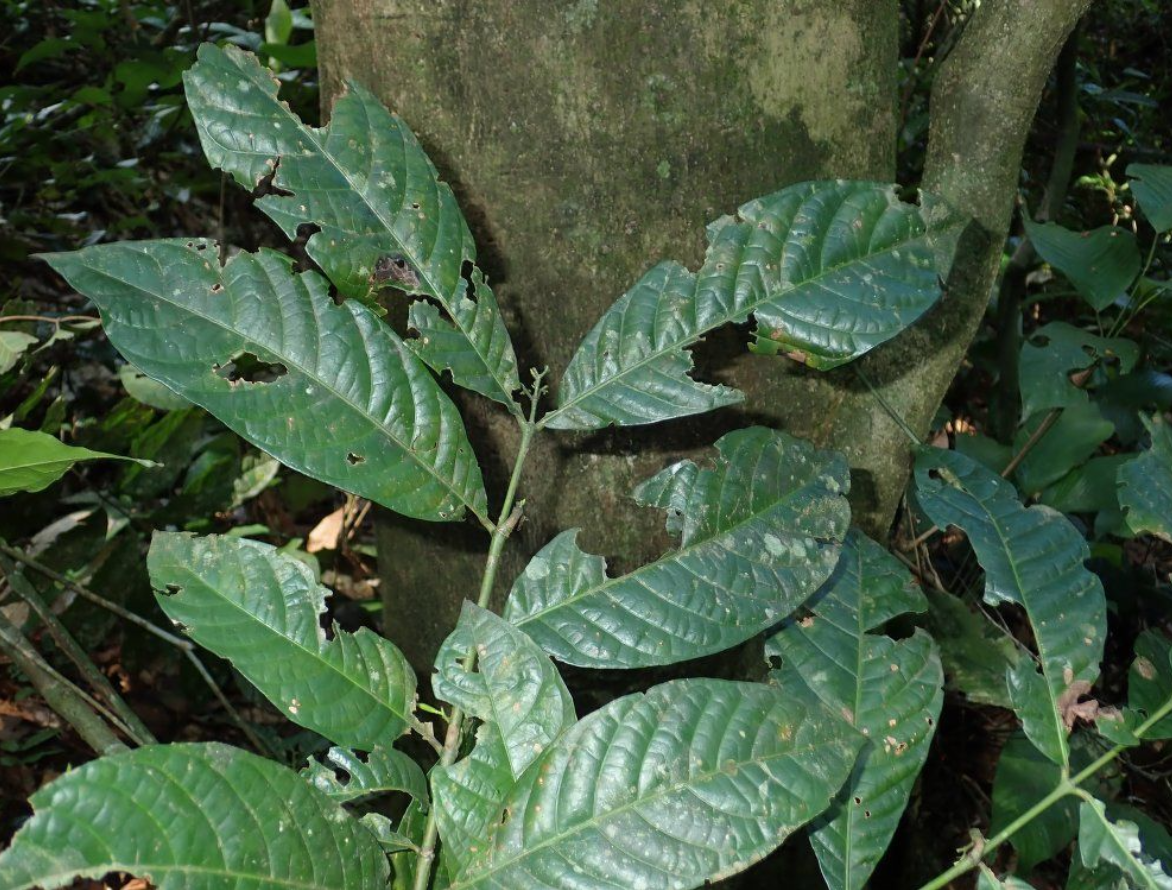
|
|
Massularia acuminata Common Names: Ijebu Chewing Stick, Chewing Stick Tree Scientific
Classification Kingdom: Plantae Phylum: Angiosperms Class: Eudicots Order: Gentianales Family: Rubiaceae Genus: Massularia Species: M. acuminata Authority: (G.Don) Bullock ex Hoyle Synonyms: Massularia floribunda G.Don, Massularia latifolia S.Moore Morphological Description Massularia acuminata is a woody shrub or medium-sized tree in the Rubiaceae
family, typically growing 3–10 m tall: · Stem: Bark grey to pale brown, smooth or slightly fissured; wood
whitish-yellow, hard, durable (Burkill, 1997). · Leaves: Simple, opposite, elliptic to oblong, 10–18 cm long, 4–7 cm
wide, glossy, acuminate apex. · Flowers: White to yellowish, tubular, 4–5 cm long, in short axillary
cymes, fragrant; blooming January–March (Orwa et al., 2009). · Fruits: Small, ovoid capsules, 1–2 cm long, containing numerous tiny
seeds; green turning brown when ripe (Burkill, 1997). Distribution and Habitat Massularia acuminata is native to tropical West Africa, thriving in diverse
ecological conditions: · Range: Nigeria, Ghana, Sierra Leone, Cameroon, Liberia, Côte
d’Ivoire (Burkill, 1997; Govaerts, 2024). · Habitat: Moist lowland forests, forest undergrowth, secondary
woodlands; prefers well-drained soils, 0–1,000 m altitude. Ethnopharmacology Massularia acuminata, native to West Africa, is traditionally used for various
medicinal purposes. Scientific studies have demonstrated its androgenic
potential, suggesting it may stimulate male sexual maturation and enhance
reproductive functions. Additionally, the plant exhibits pro-sexual effects,
potentially aiding in the management of conditions like diminished libido and
erectile dysfunction. Furthermore, Massularia
acuminata possesses antimicrobial properties, with ethanolic and methanolic
extracts showing effectiveness against certain oral pathogens. However, caution
is advised, as high doses of the ethanolic extract have been linked to
testicular toxicity in animal studies, indicating possible adverse effects on
sperm quality and reproductive health. · Aphrodisiac: Root and stem decoctions in Nigeria; aqueous extract
(500–1000 mg/kg) increased testosterone 1.8-fold and sexual behavior in male
rats (Yakubu & Akanji, 2011). · Antimicrobial (Oral Health): Stem as chewing sticks in West Africa;
ethanol extract inhibited Bacteroides gingivalis (MIC 0.5%) (Rotimi et al., 1988). · Anti-inflammatory: Stem infusions in Ghana; alkaloid-rich
extract reduced gingivitis inflammation in vitro (Aderinokun et al., 1999). · Pain Relief: Leaf decoctions in Sierra Leone. ⚠ Toxicity Profile: High doses (500–1000 mg/kg) of stem extract
caused liver enzyme elevation (ALT up 30%) and functional toxicity in rats;
safe at <250 mg/kg (Yakubu et al., 2012). Additional Uses · Construction: Hardwood used for carving, tool handles, and building in
Nigeria (Orwa et al., 2009). · Fuelwood: Branches harvested for firewood in rural communities. · Cultural: Stem chewing sticks integral to oral hygiene rituals in
Yoruba culture (Burkill, 1997). References
External Links
More Pictures |
|
| Compounds of Massularia acuminata | |
| References |
