Guiera senegalensis
|
|
Guiera senegalensis Common Names: Senegal
tea plant, wild coffee Scientific
Classification Kingdom: Plantae Clade: Angiosperms Clade: Eudicots Order: Myrtales Family: Combretaceae Genus: Guiera Species: Guiera
senegalensis J.F.Gmel. Synonyms: Guiera
glandulosa Sm. (Plants of the World Online, n.d.; World Flora
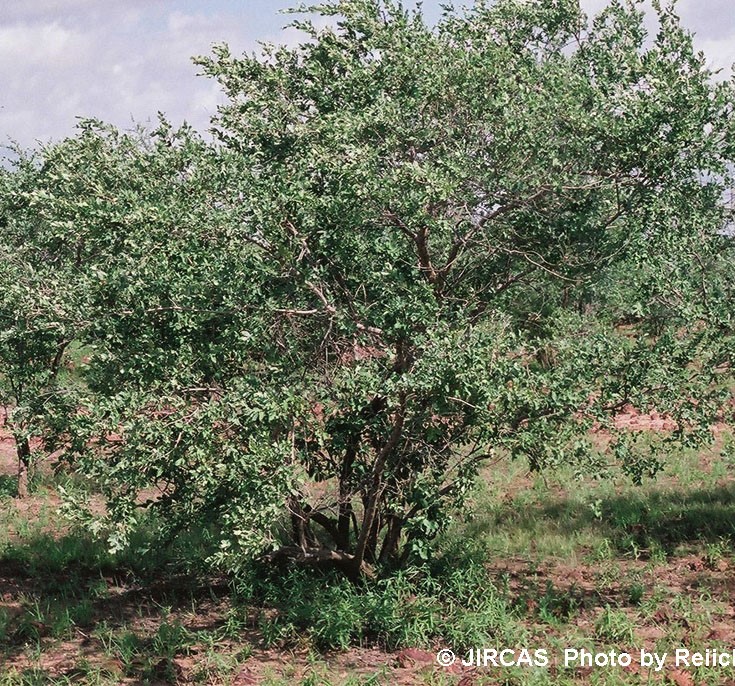
Online, n.d.). Morphological Description Guiera senegalensis is a perennial,
multi-stemmed shrub typical of Sahelian and Sudano–Sahelian vegetation. It
commonly reaches 1–3 m in height and may be taller in favorable sites. Leaves
are characteristically grey-green due to dense pubescence, an adaptation that
reduces water loss and heat load in arid climates. Flowers are small and
yellowish, borne in clusters, and the plant develops a deep and spreading root
system that supports drought tolerance and persistence on poor soils (Plants of
the World Online, n.d.; Silva et al., 2008). · Growth form: Dense shrub with multiple stems, often forming thickets in
degraded drylands (Plants of the World Online, n.d.). · Leaves: Small,
pubescent, and greyish; leaf anatomy and diagnostic microscopic features have
been documented for quality control and identification (Silva et al., 2008). · Flowers: Small,
pale-yellow to yellowish flowers; commonly described in floristic checklists as
yellowish (World Flora Online, n.d.). · Ecological traits: Drought-adapted;
frequently abundant in sandy or semi-desert settings and disturbed habitats
(World Flora Online, n.d.). Distribution and Habitat The species is widely distributed across West Tropical Africa
through the Sahel to Sudan. It grows primarily in seasonally dry tropical
biomes and is strongly associated with Sahel and Sudano–Sahelian landscapes,
including dry savanna, steppe, fallow land, and degraded rangelands. It
commonly occurs on sandy or lateritic soils under low and variable rainfall
regimes (Plants of the World Online, n.d.; PROTA, 2014). · Geographic range: West
Tropical Africa to Sudan (Plants of the World Online, n.d.). · Typical habitats: Dry
savanna, steppe, fallows, and disturbed sites; often abundant in sandy wastes
and semi-desert areas (World Flora Online, n.d.; PROTA, 2014). · Landscape role: Frequently
a dominant shrub in degraded drylands and an indicator of aridity and
disturbance in Sahelian ecosystems (PROTA, 2014). Ethnopharmacology Guiera senegalensis is among the most widely
used medicinal shrubs in West Africa, often prepared as teas, decoctions, or
topical applications. Ethnomedical uses include gastrointestinal disorders,
febrile illnesses (including malaria-like syndromes), cough and respiratory complaints,
and topical care for wounds and skin infections. These uses are consistently
documented in ethnopharmacological syntheses and regional monographs (Dirar
& Devkota, 2021; PROTA, 2014; Silva et al., 2008). · Gastrointestinal complaints: Diarrhea, dysentery, stomach pain, and ulcer-like symptoms (Aniagu
et al., 2005; PROTA, 2014). · Febrile illnesses: Traditional
use for fever and malaria-like conditions, often as leaf decoctions and
multi-plant remedies (Bonkian et al., 2018; Fiot et al., 2006; PROTA, 2014). · Skin and wound care: Leaves
used topically for wounds, inflammatory lesions, and skin infections, aligning
with antimicrobial and elastase-related laboratory findings (Bosisio et al.,
1997; Silva et al., 2008). · Antidiarrheal and anti-enteropooling activity: In rodent models, an aqueous root extract produced marked
antidiarrheal effects, including complete inhibition of castor oil-induced
diarrhea in mice, along with reduced intestinal transit and dose-related
inhibition of enteropooling. The same study also reported ulcer-protective
effects against ethanol-induced ulceration with maximal antiulcer activity at
100 mg/kg (Aniagu et al., 2005). · Gastroprotective activity from leaves: An aqueous leaf extract significantly decreased ulcer index in
multiple ulcer models, including ethanol-induced, aspirin-induced, and
stress-related ulceration, supporting traditional use for ulcer complaints
(Akuodor et al., 2013). · Antiplasmodial and antimalarial-relevant findings: A study evaluating Sahelian plant remedies reported in vivo
antiplasmodial activity for G.
senegalensis leaf decoctions in a murine malaria model,
supporting its ethnomedical role for febrile illness (Bonkian et al., 2018). In
addition, phytochemical work identified bioactive beta-carboline alkaloids and
guieranone A with in vitro antiplasmodial activity; the authors also
demonstrated synergistic antimalarial interaction between alkaloid extracts
of G. senegalensis and Mitragyna inermis,
helping explain why the plant is used in combination remedies (Fiot et al.,
2006). · Wound, skin infection, and inflammation-linked mechanisms: Leaf extracts have shown antiradical activity and antimicrobial
effects against bacteria and fungi, and the identification of elastase
inhibitors provides a plausible mechanism relevant to inflammatory skin
conditions and wound healing contexts (Bosisio et al., 1997). Botanical
characterization work further supports standardization and quality
identification of medicinal leaf materials (Silva et al., 2008). · Broader pharmacological synthesis: A comprehensive review summarizes ethnopharmacology,
phytochemistry, and pharmacological activities, consolidating evidence across
antimicrobial, anti-inflammatory, antiparasitic, and antioxidant domains (Dirar
& Devkota, 2021). ⚠ Safety and Toxicity: In
rodents, the aqueous root extract showed oral LD50 values greater than 5000
mg/kg, suggesting low acute toxicity under the tested conditions (Aniagu et
al., 2005). While alkaloid fractions and certain beta-carbolines displayed
antiplasmodial activity with relatively low cytotoxicity, guieranone A showed
strong antiplasmodial activity alongside high cytotoxicity in tested human cell
systems, indicating that safety can vary substantially by compound and
preparation (Fiot et al., 2006). Traditional water-based preparations may differ
markedly from concentrated extracts or isolated compounds; chronic use and
high-dose or long-term exposure should be approached cautiously due to limited
long-term human safety data (Dirar & Devkota, 2021) Additional Uses · Agroecology and restoration: Used in dryland restoration, windbreaks, and soil stabilization;
contributes to the structure of Sahelian shrublands and may persist on degraded
soils (PROTA, 2014). · Domestic uses: Woody
stems used as fuel and fencing materials in many Sahelian communities (PROTA,
2014). · Social and dietary use: Leaves are commonly prepared as herbal teas, sometimes referred to
as Senegal tea, for general well-being in local traditions (PROTA, 2014). References
External Links More Pictures
|
|
| Compounds of Guiera senegalensis | |
| References |
