Capsicum frutescens
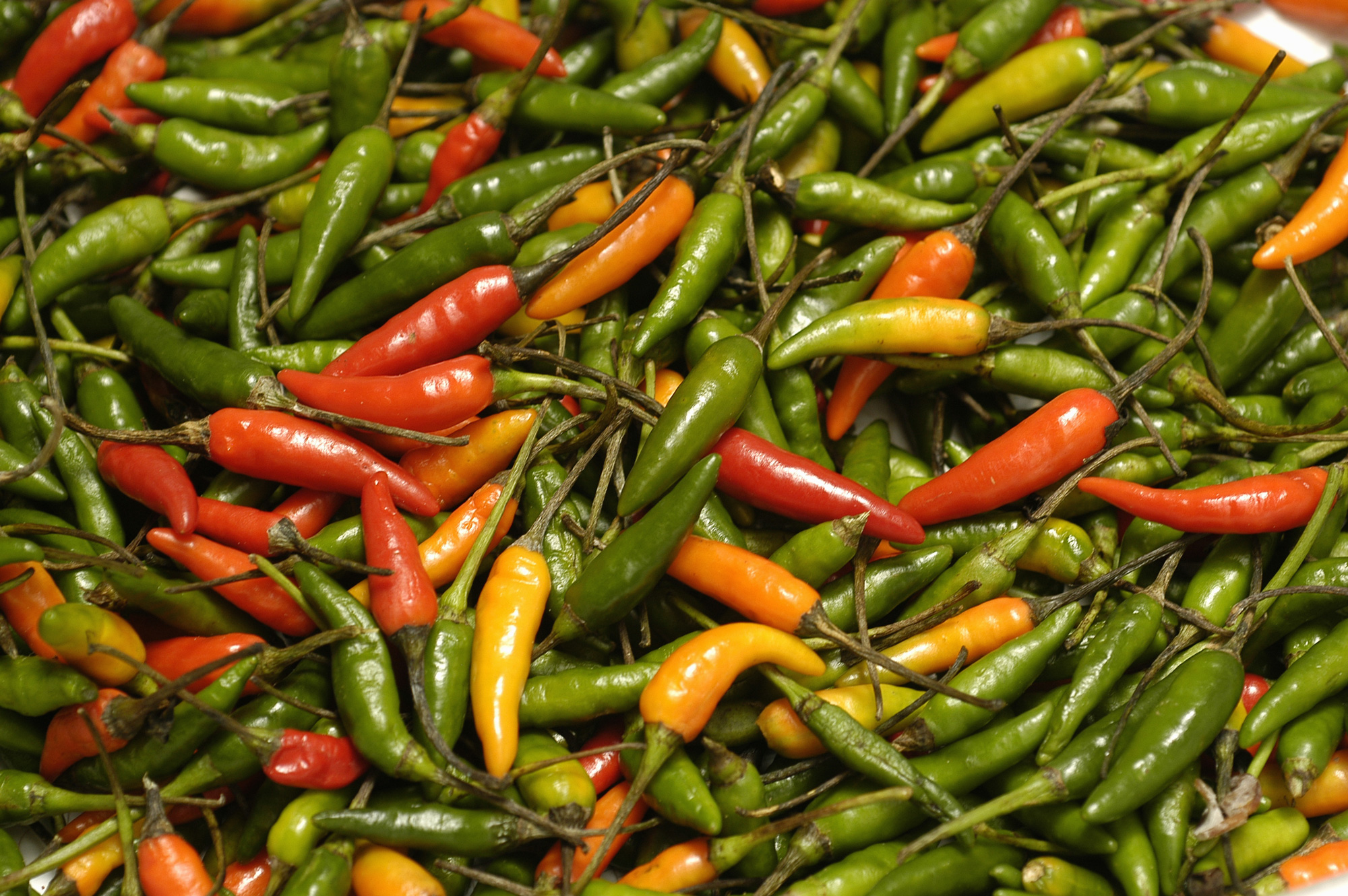
|
|
Capsicum frutescens Common Names: Tabasco pepper, bird pepper, bird
chilli, hot pepper, chili pepper Species ID: NMP-301 | wfo-0001019983 Scientific
Classification Kingdom: Plantae Clade: Tracheophytes Clade: Angiosperms Clade: Eudicots Clade: Asterids Order: Solanales Family: Solanaceae Genus: Capsicum Species: C. frutescens L. Synonyms (selected; taxonomy-dependent): Capsicum annuum var. frutescens (L.) Alef., Capsicum annuum var. frutescens (L.) Kuntze, Capsicum conicum G.Mey. Morphological Description Capsicum frutescens is a perennial subshrub or shrub (often cultivated and
sometimes treated as short-lived perennial), commonly reaching up to about 2 m
in height. It bears simple leaves and typically white, star-like flowers.
Fruits are berries that often develop in an erect position and are usually
small, narrow-conical to ellipsoid, frequently very pungent due to high
capsaicinoid concentrations in many cultivars (for example, Tabasco and bird
pepper types). · Habit: Herbaceous to somewhat woody subshrub; branching form varies
with cultivar and growing conditions · Flowers: Usually white corolla; pollination can be self or
insect-assisted · Fruit: Smooth-skinned berries, typically small and very pungent in
common cultivated types · Key chemistry: Capsaicin and dihydrocapsaicin are major pungent compounds;
phenolics and flavonoids contribute to antioxidant and antimicrobial profiles Distribution and Habitat · Native range: Southern Mexico to Tropical America (Plants of the World
Online) · Biome: Primarily seasonally dry tropical biomes in its native range
(Plants of the World Online) · Current distribution: Widely cultivated and recorded globally
through agriculture and home gardens (GBIF occurrence records) Ethnopharmacology · Oral health and tooth-related complaints: In an ethnomedicinal survey of plants used
by traditional healers for oral health problems in Cameroon, Capsicum species
are included among plants reported for toothache and related oral complaints,
reflecting local reliance on pungent, bioactive plant materials for symptomatic
relief. · Antimicrobial Activity: A detailed phytochemical and bioactivity study
on “pimenta malagueta” (Capsicum frutescens) isolated capsaicin, dihydrocapsaicin, and the flavonoid
chrysoeriol and evaluated antimicrobial activity against Gram-positive
bacteria, Gram-negative bacteria, and yeast. The study reported that
chrysoeriol was the most active compound among those tested, and MIC
determinations were performed using standardized broth microdilution methods
(Nascimento et al., 2014). · Anti-inflammatory Activity: In a rat inflammation model, capsaicin and an
ethyl acetate extract prepared from Capsicum frutescens produced anti-inflammatory effects
reported as comparable to diclofenac under the study conditions, with
dose-dependent effects noted for capsaicin (Jolayemi et al., 2013). This aligns
with traditional “warming rub” and pain-related uses where topical exposure to
capsaicinoids initially causes irritation followed by sensory desensitization
and reduced pain signaling. · Antipyretic and Symptom-Relief Use: A recent comparative evaluation of antipyretic
activity included Capsicum frutescens among plants assessed in experimental fever models,
reflecting continued interest in linking ethnomedicinal practice to measurable
pharmacological endpoints (Adefolalu et al., 2023). While antipyretic outcomes
vary by extract type and model, inclusion in controlled experiments strengthens
the evidence trail beyond anecdotal use. · Antioxidant Activity and Phenolic Profile The same Capsicum frutescens study that isolated key pungent and flavonoid
constituents also assessed antioxidant activity across extracts and linked
higher antioxidant activity to specific extract types and phenolic composition
(Nascimento et al., 2014). This supports the broader “food as medicine” framing
where peppers contribute both sensory (capsaicinoid) and redox-active
(phenolic) effects. Toxicity and Safety: Capsaicin is a strong irritant to eyes, skin, and mucous
membranes. Exposure can cause burning pain, tearing, coughing, and breathing
difficulty, and large ingestions may irritate the gastrointestinal tract.
Safety profiles differ greatly between normal culinary use and concentrated
exposures (for example, extracts and aerosolized products). Avoid direct
contact with eyes and prolonged skin exposure to concentrated preparations.
Individuals with asthma or reactive airways may be more sensitive to airborne
exposure (National Pesticide
Information Center; Poison Control). Additional Uses · Culinary: Widely used fresh, dried, or fermented; cultivar groups
include Tabasco-type and bird pepper types, commonly valued for pungency and
aroma · Household: Often used as a household counterirritant and in spice-based
home remedies where food and medicine overlap · Agroecology: Cultivated in gardens and farms; widely exchanged and
introduced well beyond its native range through human use References
External Links
More Pictures
|
|
| Compounds of Capsicum frutescens | |
| References | Murtala Muhammad, Etal. (2023). Phytochemical analysis of Nigerian medicinal plants. NMPP-DB
Project, Department of Biochemistry, Kano University of Science and Technology,
Wudil |