Brachystelma togoense
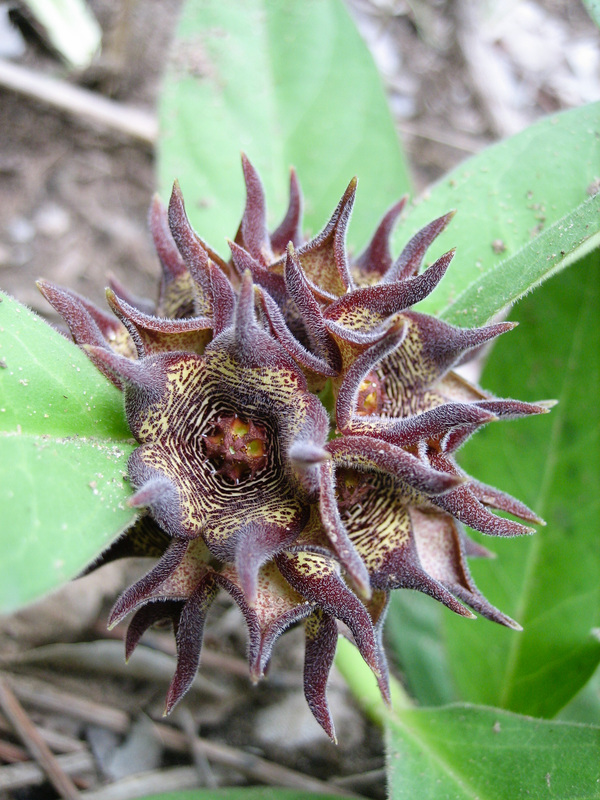
|
|
Brachystelma togoense Common Names: Togo brachystelma, West African brachystelma Scientific
Classification Kingdom: Plantae Phylum: Tracheophyta Class: Magnoliopsida Order: Gentianales Family: Apocynaceae Genus: Brachystelma Species: Brachystelma
togoense Synonyms: Brachystelma glabrum Schltr., Brachystelma lineare A.Chev. (Kew Science, n.d.) Morphological Description Brachystelma togoense is
a perennial geophytic herb characterized by a tuberous root system that serves
as a storage organ, enabling survival in seasonal climates. The plant typically
grows to 10–30 cm tall, with slender, erect to decumbent stems that are
sparsely pubescent. Key morphological features include: · Roots: Tuberous, discoid to cylindrical, 3–10 cm
in diameter, with a fibrous root system; tubers are edible and used in
traditional diets (Aremu & Hlophe, 2022). · Leaves: Opposite, linear to lanceolate, 2–5 cm
long and 0.5–1 cm wide, with a slightly hairy surface; leaves are reduced
during dormancy (Kew Science, n.d.). · Flowers: Small, star-shaped, 5–10 mm in
diameter, with five petals that are greenish-yellow to brownish, often with
purple veins; flowers are arranged in clusters of 1–5, emitting a faint
carrion-like odor to attract fly pollinators; flowering occurs from November to
February. · Fruit: Follicles, spindle-shaped, 4–7 cm long,
containing numerous comose seeds that are wind-dispersed; fruiting occurs from
February to April. The plant’s
inconspicuous flowers and tuberous roots make it a distinctive member of the
Brachystelma genus, valued for both its ecological role and ethnobotanical
significance (Aremu & Hlophe, 2022). Distribution and Habitat Brachystelma togoense is
native to West Africa, with documented occurrences in Nigeria, Togo, Ghana,
Benin, and Côte d’Ivoire. Its distribution spans the Guineo-Congolian and
Sudanian ecological zones, between latitudes 5°N and 12°N. The species thrives
in the following habitats: · Grasslands: Common in savanna grasslands with
annual rainfall of 800–1,500 mm, often on sandy or loamy soils (Kew Science,
n.d.). · Open Woodlands: Found in disturbed areas and
secondary woodlands, preferring well-drained soils with a pH of 5.5–7.0. · Rocky Outcrops: Occasionally occurs in rocky
terrains, where tubers are protected from grazing. The species is adapted
to seasonal climates, with tubers enabling dormancy during dry periods. It
grows at altitudes of 100–800 m and is tolerant of temperatures between
20–35°C, though it is sensitive to waterlogging (Aremu & Hlophe, 2022). Ethnopharmacology Brachystelma togoense is
valued in West African traditional medicine, particularly among rural
communities in Nigeria and Togo, where its tubers and aerial parts are used to
treat various ailments. Ethnopharmacological studies have identified bioactive
compounds that support these traditional uses. Key medicinal applications
include: · Antimicrobial Activity: Methanolic extracts from
aerial parts yield compounds such as phaeophytin A, α-amyrin, lupeol, and
β-sitosterol. Phaeophytin A exhibits promising antimicrobial effects
against Candida albicans (MIC 0.09 mg/mL) and moderate activity against Escherichia coli, Staphylococcus aureus, Streptococcus typhi, and Staphylococcus
pneumoniae (MIC 0.18–0.37
mg/mL). These findings validate traditional use for treating wounds and skin
infections (Ekalu et al., 2019). · Anti-inflammatory Effects: Tuber decoctions are
used to alleviate chest pains and inflammation. Preliminary studies suggest
that triterpenoids like lupeol contribute to anti-inflammatory activity by
inhibiting prostaglandin synthesis, supporting its use in managing pain and
swelling (Aremu & Hlophe, 2022). · Respiratory Conditions: Leaf and tuber infusions
are employed to treat colds and respiratory infections. The presence of
phenolic compounds may provide mild expectorant and antimicrobial effects,
though specific studies on respiratory pathogens are limited. · Nutritional and Tonic Uses: Tubers are consumed as
a famine food and used in tonics to boost vitality. Nutritional analysis
indicates moderate levels of carbohydrates (15–20% dry weight) and trace
minerals, supporting their role as a dietary supplement (Aremu & Hlophe,
2022). ⚠ Toxicity Profile: Limited data exist on the toxicity of
Brachystelma togoense, but caution is advised due to potential risks: Cytotoxicity:
High doses of methanolic extracts (>1 mg/mL) show mild cytotoxicity in
vitro, possibly due to triterpenoids and sterols, though specific toxicological
studies are lacking. Allergic Reactions: The carrion-like odor of flowers and
the presence of phenolic compounds may cause skin irritation or allergic
reactions in sensitive individuals (Aremu & Hlophe, 2022). Precautions: Use
should be guided by traditional healers or healthcare professionals. Pregnant
women, children, and individuals with liver or kidney conditions should avoid
use until safety is established. Overharvesting of tubers poses ecological
risks (Ekalu et al., 2019). Additional Uses · Nutritional: Tubers are edible, boiled or
roasted, and serve as a famine food in rural West Africa, providing
carbohydrates and minerals during food shortages (Aremu & Hlophe, 2022). · Cultural: The plant is occasionally used in
rituals, with tubers symbolizing resilience and sustenance in some Nigerian
communities. · Ecological: Its tuberous roots contribute to
soil stabilization in grasslands, and the plant supports pollinator diversity
due to its fly-pollinated flowers. Conservation and Sustainability Brachystelma togoense
faces threats from habitat loss due to agricultural expansion and
overharvesting of tubers for food and medicine. Its geophytic nature makes it
vulnerable to unsustainable collection practices. Micropropagation techniques
have been proposed to ensure sustainable cultivation, with in vitro studies
showing successful tuber regeneration under controlled conditions. Conservation
efforts should prioritize habitat preservation and community-based cultivation
programs to maintain its ecological and medicinal value (Aremu & Hlophe,
2022). References
External Links More Pictures
|
|
| Compounds of Brachystelma togoense | |
| References |