Cylicodiscus gabonensis
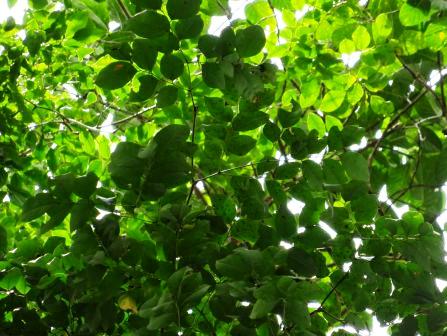
|
|
Cylicodiscus gabunensis Common Names: Denya, Okan, African Greenheart Scientific
Classification Kingdom: Plantae Clade: Tracheophytes Clade: Angiosperms Clade: Eudicots Order: Fabales Family: Fabaceae Genus: Cylicodiscus Species: C. gabunensis Binomial Name: Cylicodiscus gabunensis Harms Synonyms: Cyrtoxiphus staudtii Harms, Erythrophleum gabunense Taub., Erythrophleum letestui A.Chev. ex Baker f., Piptadenia gabunensis (Harms) Roberty Morphological Description Cylicodiscus gabunensis is a large, evergreen or deciduous tree, reaching 30–60 m in
height, with a straight, cylindrical bole up to 2 m in diameter, often swollen
or fluted at the base. Key features include: · Bark: Rough, scaly, grey-brown, exuding red resin when cut · Leaves: Pinnate, compound, 10–20 cm long, with 10–20 pairs of
elliptical leaflets, 2–4 cm long, glossy green · Flowers: Small, white, 3–5 mm, in axillary panicles, blooming
seasonally · Fruit: Flat, woody pods, 10–20 cm long, 3–5 cm wide, brown,
containing 4–8 flat seeds Young trees bear brown
thorns, which diminish with age (Fern, 2022). Distribution and Habitat Cylicodiscus gabunensis is native to West and Central Africa, including Gabon,
Cameroon, Nigeria, Democratic Republic of Congo, and Ghana. It thrives in: · Regions: Lowland rainforests, riverine forests · Climate: Tropical, humid, 25–35°C, rainfall 1,500–3,000 mm annually · Soil: Well-drained, loamy, slightly acidic (pH 5.0–6.5) · Elevation: Sea level to 700 m It prefers dense forest
understories. Ethnopharmacology Cylicodiscus gabunensis is utilized in traditional African medicine, with studies
supporting its applications: · Antimicrobial: Bark decoctions in Nigeria treat infections; ethanol
extracts inhibit the growth of 17 microorgnisms. The best MIC and MBC
values for the microorganisms sensitive to the extract were 0.00078 and 0.00315
mg/ml respectively. The greater and remarkable antimicrobial activity of the Ethyl
acetate extract of C. gabunensis was recorded with Staphylococcus aureus,
Proteus vulgaris and Bacillus cereus T. These results provide a rationalization
for the traditional use of this plant for the treatment of infectious diseases
(Kouam, J et al., 2007). · Anti-inflammatory: Leaf poultices reduce swelling. · Antimalarial: The antimalarial activity of ethanolic stembark extract of
Cylicodiscus gabunensis was studied in vivo in mice infected with Plasmodium
berghei berghei The stembark extract possesses a promising antiplasmodial
activity, which can be exploited in malaria therapy (Okokon, J. E et al., 2006).
The antimalarial activity of ethanolic extracts
of C. gabunensis bark was confirmed in vitro, with evidence for phenolic acids,
primarily gallic acid and close analogues such as ethyl gallate, likely
providing this effect. Further fractionation produced the most potent fraction
with a 50% inhibitory concentration of 4.7 µg/ml. These results support the use of the bark of C.
gabunensis as a traditional medicine in the treatment of human malaria (Omar
Aldulaimi et al., 2006) · Analgesic: The EACg was administered by oral route at
the doses of 100, 200, and 400mg/kg. All the doses, were efficient on pain,
with a more potent effect at 200 mg/kg (P<0.01) expressing 61.55% of
inhibition in the acetic acid test or 63.11 and 87.09 % respectively during the
first and the second phase in the formalin test. For the pain induced by
thermal stimuli, the plant at 200 mg/kg expressed 73.09% of inhibition during
the first hour in the hot plate test and 70.40% in the tail immersion test
during the fourth hour. The effect of EACg (200mg/kg) was partially reversed by
naloxone (1 mg/kg) in all the analgesic tests. For inflammation, the oedema
volume at all the doses, was significantly reduced with 68.21 %; or 87.09 %;
and 87.09 % respectively in the carrageenan, serotonin and histamine tests (one
hour post dosing) at the dose of 200mg/kg(P<0.01). These results suggest
that the EACg may have components that interact with opioid receptors, or serotonin
and histamine pathways (Keugni, B. A. et al., 2014). · Gastrointestinal Aid: Bark in Ghana for stomach issues; tannins
linked to astringent effects (Burkill, 1995). Phytochemistry Bioactivity is
attributed to key compounds: · Phenolics: Gallic acid, catechins—antimicrobial, antimalarial · Tannins: Astringent, anti-inflammatory · Flavonoids: Antioxidant, analgesic · Saponins: Potential antimicrobial activity · Resins: Wound healing, from bark exudate ⚠ Toxicity Profile: No acute toxicity reported; LD₅₀ > 2,000
mg/kg in rats (safe at low doses). Excessive bark resin may irritate
skin/mucous membranes due to tannins. Limited data on pregnancy use. Additional Uses · Timber: Durable hardwood (Janka 2,700 lbf), termite-resistant, used
for construction, flooring, furniture · Soap: Bark ash in Cameroon for saponin-based soap · Cultural: Wood in Gabon for carvings; bark in rituals · Conservation: Vulnerable due to logging; sustainable practices urged
External Links More Pictures |
|
| Compounds of Cylicodiscus gabonensis | |
| References |