Cissus polyantha.
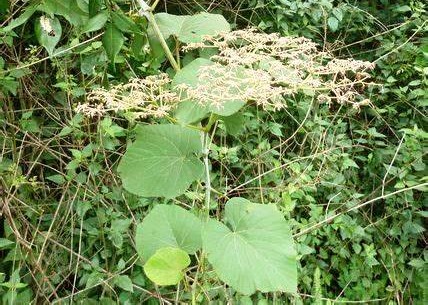
|
|
Cissus polyantha Common Names: Scientific
Classification Kingdom: Plantae Phylum: Tracheophyta Class: Magnoliopsida Order: Vitales Family: Vitaceae Genus: Cissus Species: Cissus polyantha Synonyms: Cissus oliveriana Gilg, Cissus usambarensis Gilg ex Engl., Cissus
polyantha var. pubescens Dewit (Plants of the World Online, n.d.; World Flora
Online, n.d.). Morphological Description Cissus polyantha is a
succulent, tendril-climbing liana, growing 9–15 meters long, often draping over
trees or shrubs. Its juicy stems and vibrant foliage make it ecologically
significant. Key features include: · Stems: Young stems green, glabrous to pubescent,
cylindrical; mature stems pliable, with smooth red-brown, sometimes glaucous
bark, 1–2 cm thick (West African Plants, n.d.). · Leaves: Red when young, maturing to glossy green, ovate
to rhombic or oblong-ovate, 5–20.5 cm long, 3–17 cm wide; apex narrowly
acuminate, base cordate, margins with fine, 1 mm teeth; petioles 2–5 cm (World
Flora Online, n.d.). · Inflorescences: Complex umbel-like cymes, 6–10 cm wide,
many-flowered, with greenish-white flowers, 2–3 mm diameter (Selina Wamucii,
n.d.). · Fruit: Black, pyriform or subglobose berries, 4–5 mm
diameter, glabrous, single-seeded, ripening post-rainy season (Plants of the
World Online, n.d.). · Tendrils: Coiled, opposite leaves, enabling climbing;
stems may produce adventitious roots (West African Plants, n.d.). The liana’s climbing
habit and fleshy stems aid survival in seasonally dry environments, while its
berries attract birds, facilitating seed dispersal (Selina Wamucii, n.d.). Distribution and Habitat Cissus polyantha is
native to West and Central Africa, extending to Northern Uganda, occurring in
Benin, Burkina Faso, Cameroon, Central African Republic, Guinea, Ivory Coast,
Liberia, Nigeria, Sierra Leone, Sudan, Togo, and the Democratic Republic of the
Congo. It thrives in: · Seasonally
Dry Tropical Biomes: Common in savanna
woodlands, thickets, and grassland with rocky hollows (Plants of the World
Online, n.d.). · Elevation: Predominantly at 1,000–1,500 meters,
tolerating 800–1,800 meters, with annual rainfall of 700–1,200 mm (West African
Plants, n.d.). · Soils: Prefers well-drained, rocky, or sandy-loam
soils; often found in disturbed areas or secondary forests (Selina Wamucii,
n.d.). Its adaptability to
drought and poor soils makes it a resilient species in degraded landscapes
(GBIF, n.d.). Ethnopharmacology Cissus polyantha is
widely used in West African traditional medicine, particularly in Nigeria,
Cameroon, and Benin, for treating infections, wounds, and reproductive
disorders. Ethnopharmacological studies confirm its bioactivity, driven by
flavonoids, triterpenoids, and alkaloids. Key medicinal uses include: · Antimicrobial: Methanol leaf extracts exhibit strong activity
against Staphylococcus aureus (MIC = 62.5 µg/mL), Escherichia coli (MIC =
125 µg/mL), and Pseudomonas aeruginosa (MIC = 125 µg/mL), validating use for
wound infections and diarrhea; flavonoids and saponins are key actives (Agogbua
et al., 2022). · Antioxidant: Leaf and stem extracts show high DPPH radical
scavenging (IC50 = 15.2 µg/mL), linked to quercetin and kaempferol derivatives,
justifying use for oxidative stress-related ailments (Agogbua et al., 2022). · Reproductive
Health: In Nigeria, leaf
decoctions are used for menstrual disorders and infertility. ⚠ Toxicity Profile: Limited data exist on Cissus polyantha toxicity, but preliminary
studies suggest low risk with traditional use. Key findings include: Acute
Toxicity: Methanol leaf extracts show an LD50 > 5,000 mg/kg in mice,
indicating low acute toxicity; no cytotoxicity to Vero cells at 200 µg/mL (Agogbua
et al., 2022). Precautions: Avoid high doses or use during pregnancy/lactation
due to estrogenic effects. Further toxicological studies are needed (Agogbua et
al., 2022). Additional Uses · Food: Ripe berries are occasionally consumed by
local communities, though not a staple; leaves are used as a famine food in
Nigeria (Selina Wamucii, n.d.). · Ecological: Stabilizes soils in rocky areas; provides
canopy cover for smaller plants; attracts pollinators and seed-dispersing birds
(West African Plants, n.d.). · Ornamental: Cultivated in gardens for its lush foliage and
climbing habit, though less common than other Cissus species (Monsteraholic,
n.d.). References
External Links More Pictures |
|
| Compounds of Cissus polyantha. | |
| References |