Quassia africana
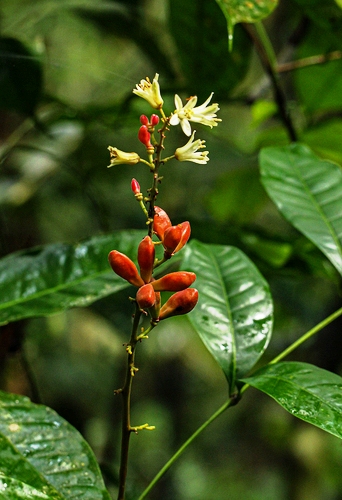
|
|
Quassia africana Common Names: Bitter Wood, African Quassia Scientific
Classification Kingdom: Plantae Phylum: Tracheophyta Class: Magnoliopsida Order: Sapindales Family: Simaroubaceae Genus: Quassia Species: Q. africana Synonyms: Simaba africana Baill. Morphological Description Quassia africana is a shrub or small tree, growing 1.2–4 m tall, occasionally
reaching 6 m in favorable conditions. Its key features include: · Stem: Smooth to slightly fissured bark, grayish-brown, often with
a bitter taste · Leaves: Compound, alternate, pinnate, 10–30 cm long, with 5–11
glossy, lanceolate leaflets (3–8 cm long) · Flowers: Small, greenish-white, borne in axillary or terminal
racemes, blooming during wet seasons · Fruit: Small drupes, 1–2 cm long, green turning reddish when ripe,
containing 1–2 seeds The plant’s bitterness
is due to quassinoids, particularly concentrated in the root bark and leaves
(Fern, 2024). Distribution and Habitat Quassia africana is native to West and Central Tropical Africa, from Senegal
and Gambia eastward to Cameroon, eastern Zaire (DR Congo), and southward to
northern Angola. It thrives in: · Ecosystems: Rainforest understoreys, gallery forests, and humid shaded
woodlands · Altitude: 5–500 m above sea level · Climate: Tropical, with high humidity (70–90%) and rainfall
(1,200–2,500 mm annually) It prefers shaded, moist
environments and is often found along riverbanks (Burkill, 1997). Ethnopharmacology Quassia africana is a shrub or undershrub growing 1.2 to 4 meters tall,
traditionally utilized in African medicine for its therapeutic properties. The
plant contains quassinoids, notably simalikalactone D, which exhibit antiviral
activities against pathogens such as Herpes simplex, Semliki Forest, Coxsackie,
and Vesicular stomatitis viruses. Additionally, quassinoids like quassin and
neo-quassin contribute to the plant's medicinal efficacy. While detailed
studies on Quassia africana are limited, related species like Quassia amara
have demonstrated antibacterial, antifungal, antitumor, and insecticidal
properties, suggesting potential similar benefits. These findings support the
traditional use of Quassia africana in managing various ailments, though
further research is necessary to comprehensively understand its pharmacological
potential. · Tonic and Appetizer: In Ghana, root bark infusions stimulate
appetite; bitterness from quassinoids enhances digestion (Burkill, 1997). · Antiviral Activity: Ethanol extracts inhibited Herpes simplex,
Semliki Forest, Coxsackie, and Vesicular stomatitis viruses, with
simalikalactone D (IC₅₀ < 1 µg/mL) as the active quassinoid (Apers et al.,
2002). · Vermifuge: In Nigeria, root decoctions expel intestinal worms;. · Antimalarial: In Cameroon, stem bark treats malaria; simalikalactone D
showed larvicidal activity against Anopheles gambiae (LC₅₀ 24 ppm) (Sama et al., 2014). · Febrifuge: Leaf decoctions reduce fever in Togo; anti-inflammatory
properties noted in quassinoids (Dalziel, 1937). ⚠ Toxicity Profile: No acute toxicity is well-documented, but high
doses of quassinoids may cause nausea or gastrointestinal irritation. LD₅₀ in
mice exceeds 1,000 mg/kg for root extracts, suggesting moderate safety (Apers
et al., 2002). Additional Uses · Ethnobotanical: Wood used for carving tools in rural
communities due to its durability (Fern, 2024). · Ecological: Provides shade in agroforestry systems, supporting
biodiversity (Burkill, 1997). References
External Links More Pictures |
|
| Compounds of Quassia africana | |
| References |