Paullinia pinnata
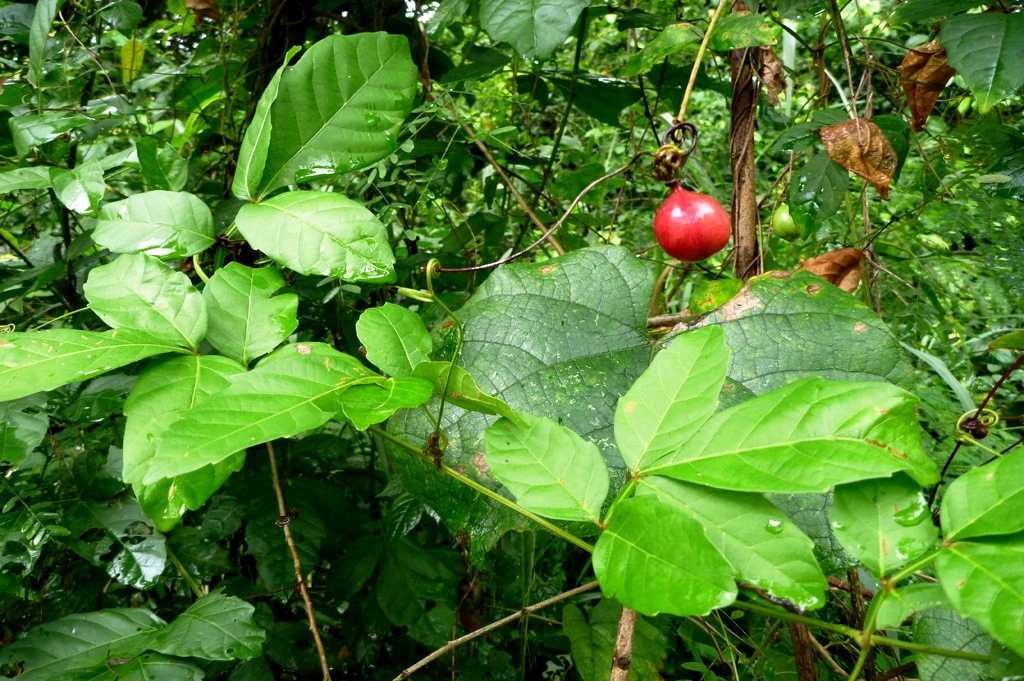
|
|
Paullinia pinnata Common Names: Bread and cheese plant, Sweet gum,
Timbo, Tietie Scientific
Classification Kingdom: Plantae Clade: Tracheophytes Clade: Angiosperms Clade: Eudicots Clade: Rosids Order: Sapindales Family: Sapindaceae Genus: Paullinia Species: P. pinnata Synonyms: Paullinia africana R.Br. ex Tedlie, Paullinia angusta N.E.Br., Paullinia hostmannii Steud., Paullinia pendulifolia Rusby, Cururu pinnata House, Pancovia heckelii Claudel, Tondin surinamensium Schill. Morphological Description Paullinia pinnata is a woody climber or liana, typically 3–10 meters long,
with tendrils for climbing. Its key characteristics include: · Stems: Slender, woody, glabrous to slightly pubescent, often
twining over other vegetation. · Leaves: Pinnate, with 5 leaflets (5–15 cm × 2–6 cm), terminal
leaflet largest; elliptic to obovate, margins crenate, rachis winged, green
(Dokosi, 1998). · Flowers: Small, white to cream, 3–5 mm diameter, in axillary or
terminal racemes; 5 petals, fragrant; flowering during rainy season
(July–October) (Kew Science, n.d.). · Fruit: Obconical capsules (2–3 cm), three-lobed, red when ripe,
splitting to reveal 1–3 black seeds with a white, edible aril (Fern, 2024). Distribution and Habitat Paullinia pinnata is widely distributed in tropical and subtropical regions: · Geographic Range: Native to tropical America (Mexico to
Brazil) and Africa (Nigeria, Ghana, Cameroon, Ethiopia, Zimbabwe); in Nigeria,
common in southern forests (e.g., Cross River) and northern savanna (e.g., Bauchi);
also in Madagascar and Asia (Kew Science, n.d.; Burkill, 1985). · Habitat: Thrives in evergreen and mixed forests, riverbanks, and
secondary growth; prefers moist, well-drained loamy soils (pH 5.5–7.0) with
1,000–2,500 mm annual rainfall; found at elevations up to 1,200 m in Zimbabwe
(Fern, 2024). · Ecological Role: Supports biodiversity as a host for
lepidopteran larvae (e.g., *Morpho polyphemus*); contributes to forest canopy
structure; seeds dispersed by birds (Dokosi, 1998). Ethnopharmacology Paullinia pinnata is a cornerstone of traditional medicine in Nigeria, Ghana,
and other African regions, valued for its antimicrobial, anti-inflammatory, and
neurological benefits. Its pharmacological potential is driven by over 50
identified compounds, with studies validating extensive traditional uses. Traditional Uses In African
ethnomedicine, particularly among Hausa, Yoruba, and Akan communities, Paullinia pinnata is used for: · Infections: Leaf decoctions treat sore throat, dysentery, and skin
infections; root extracts manage gonorrhea and leprosy (Odugbemi, 2008). · Malaria and Fever: Leaf infusions are used as antimalarial
remedies in Nigeria and Ghana (Neuwinger, 2000). · Neurological Disorders: Leaf extracts treat insomnia, epilepsy,
and mental disorders in Cameroon and Nigeria (Ajibade et al., 2022). · Pain and Inflammation: Leaf pastes relieve rheumatoid arthritis,
snakebites, and wounds in East Africa and Cameroon (Chabra et al., 1991). · Reproductive Health: Root infusions enhance libido and treat
erectile dysfunction in Ghana; also used for threatened abortion (Annan et al.,
2013). · Helminthiasis: Root decoctions expel intestinal worms in Ghana (Agyare et
al., 2014). Pharmacological Studies Pharmacological studies
have validated numerous traditional uses of Paullinia pinnata, focusing on its leaves, roots, and stems: · Anticonvulsant Activity: Methanolic leaf extracts (400 mg/kg)
protected mice against pentylenetetrazol-induced seizures (ED50: 306 mg/kg),
increasing GABA levels via glutamic acid decarboxylase activation, supporting
Yoruba use for epilepsy (Ajibade et al., 2022). · Anti-inflammatory and Analgesic Activity: Methanolic leaf extracts (300 mg/kg)
reduced CFA-induced paw edema in rats by 98% and pain by 79%, inhibiting NO,
TNF-α, and IL-1β production, validating Cameroonian use for arthritis (Tseuguem
et al., 2019). · Antimalarial Activity: Methanolic leaf extracts (400 mg/kg)
reduced *Plasmodium berghei* parasitemia in mice by 60%, with flavonoids and
procyanidins as active compounds, supporting Hausa use for malaria (Ajibade et
al., 2014). · Anthelmintic Activity: Hydroethanolic root extracts (1 mg/mL)
reduced *Caenorhabditis elegans* survival by 85%, with trimeric A-type
procyanidins as key compounds, validating Ghanaian use for helminthiasis
(Spiegler, 2020). · Antihypertensive Activity: use for
cardiovascular health in Côte d'Ivoire
⚠ Safety
Considerations: Paullinia pinnata is
generally safe at therapeutic doses, but some risks are noted: Acute Toxicity:
Methanolic leaf extracts showed no mortality in mice at 5,000 mg/kg (LD50
>5,000 mg/kg), indicating high safety; mild sedation observed at high doses
(Afagnigni et al., 2020). Fish
Poisoning: Stems contain saponins used to stun fish in shallow waters,
potentially toxic to aquatic life (Bates, 1863). Reproductive Toxicity:
Hydroethanolic root extracts (1,000 mg/kg) reduced sperm motility in rats by
25% after 28 days, suggesting caution for fertility (Baffoe et al., 2021). Allergic
Reactions: Leaf sap may cause dermatitis in sensitive individuals (Neuwinger,
2000). Additional Information · Nutritional Value: Leaf arils are edible, containing 15%
protein and essential fatty acids; used as a famine food in Ghana (Annan et
al., 2013). · Ecological Role: Host plant for lepidopteran larvae
(*Euphaedra medon*, *Morpho polyphemus*); enhances forest biodiversity; can be
invasive in disturbed areas (Dokosi, 1998). · Cultural Significance: Used in Yoruba rituals for spiritual
cleansing; revered in Akan folklore for healing potency (Odugbemi, 2008). · Other Uses: Stems used as fish poison and rope; leaves as insect
repellent in Nigerian agriculture (Bates, 1863). References
External Links More Pictures
|
|
| Compounds of Paullinia pinnata | |
| References |
