Mezoneuron benthamianum
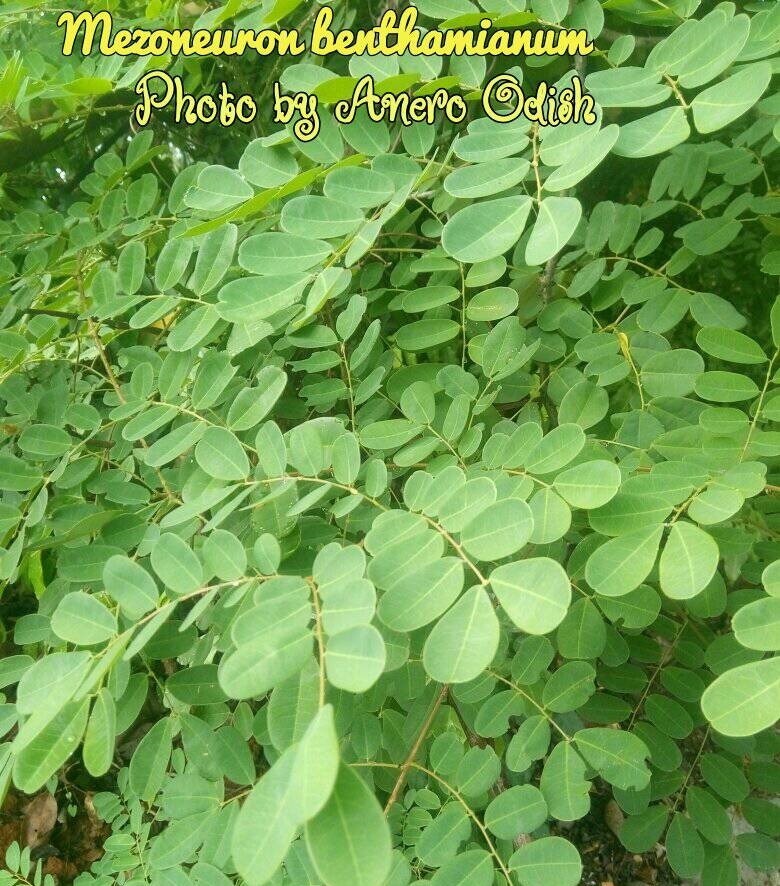
|
|
Mezoneuron benthamianum Common Names: Chewing-stick plant, thorny hedge, scrambling
shrub Scientific
Classification Kingdom: Plantae Clade: Tracheophyta Clade: Angiosperms Class: Magnoliopsida Order: Fabales Family: Fabaceae Genus: Mezoneuron Species: Mezoneuron benthamianum
Baill. Synonyms: Caesalpinia benthamianum. Morphological Description Mezoneuron benthamianum
is a thorny scrambling shrub or woody climber that can reach stem lengths of
about 20 m. The stems are armed with recurved spines that allow the plant to
climb over surrounding vegetation and form dense thickets, making it suitable as
a defensive hedge (Useful Tropical Plants, n.d.). · Growth
form: Thorny scrambling shrub
or liana (Useful Tropical Plants, n.d.). · Leaves: Compound, typical of Fabaceae; leaves
are used in antimalarial decoctions (Jansen et al., 2017). · Chewing-stick
use: Roots and stems used
for oral hygiene (Osamudiamen et al., 2020). · Water-yielding
stems: Cut stems reportedly
exude drinkable sap (Useful Tropical Plants, n.d.). Distribution and Habitat The species occurs
across West Tropical Africa, from Senegal eastward through Nigeria and into
parts of Central Africa (GBIF, n.d.). It is most common in secondary
vegetation, savanna woodland, gallery forest margins, fallow land, and
roadsides, indicating high ecological tolerance to disturbance (Dickson et al.,
2006; Useful Tropical Plants, n.d.). · Biome: Seasonally dry tropical environments (Useful
Tropical Plants, n.d.). · Habitat: Secondary jungle, savanna forest, gallery
forest edges, and ruderal sites (Dickson et al., 2006). · Ecology: Often persistent and dominant in hedge systems
and disturbed landscapes (GBIF, n.d.). Ethnopharmacology · Diarrhea
and dysentery: treated with root and
leaf decoctions (Mbagwu & Adeyemi, 2008). · Malaria: treated using leaf decoctions by Guinean
healers (Jansen et al., 2017). · Wounds
and skin infections: treated topically
(Dickson et al., 2006). · Oral
hygiene and toothache: treated using chewing
sticks (Osamudiamen et al., 2020). · Aphrodisiac
and erectile dysfunction:
treated using root preparations (Zamblé et al., 2008). · Antiplasmodial: Leaf extracts showed IC50 values of 22.5–32.6
µg/mL against Plasmodium falciparum, while a precipitated fraction reached
about 6.5 µg/mL; mezobenthamic acids, flavonoids and polyphenols were
identified as active constituents (Jansen et al., 2017). · Antidiarrheal: Aqueous extract reduced castor-oil-induced
diarrhea and intestinal motility at 400–1600 mg/kg in mice (Mbagwu &
Adeyemi, 2008). · Antimicrobial: Root-bark extracts showed MIC values of
31.2–1000 µg/mL and potentiated norfloxacin four-fold against resistant
Staphylococcus aureus (Dickson et al., 2006). · Oral
health and antioxidant:
Root extracts inhibited Streptococcus mutans and had DPPH IC50 values of 21–24
µg/mL (Osamudiamen et al., 2020). · Vasorelaxant
and aphrodisiac: Root extracts induced
nitric-oxide-mediated vasorelaxation and increased sexual behavior in male rats
(Zamblé et al., 2008). ⚠ Toxicity Profile: No mortality was observed in rodents at oral doses up to 2 g/kg,
although intraperitoneal LD50 values around 1021 mg/kg were reported. Toxicity
varies with plant part and extraction method (Zamblé et al., 2008). References
External Links More Pictures |
|
| Compounds of Mezoneuron benthamianum | |
| References |