Dioscoreophyllum cumminsii
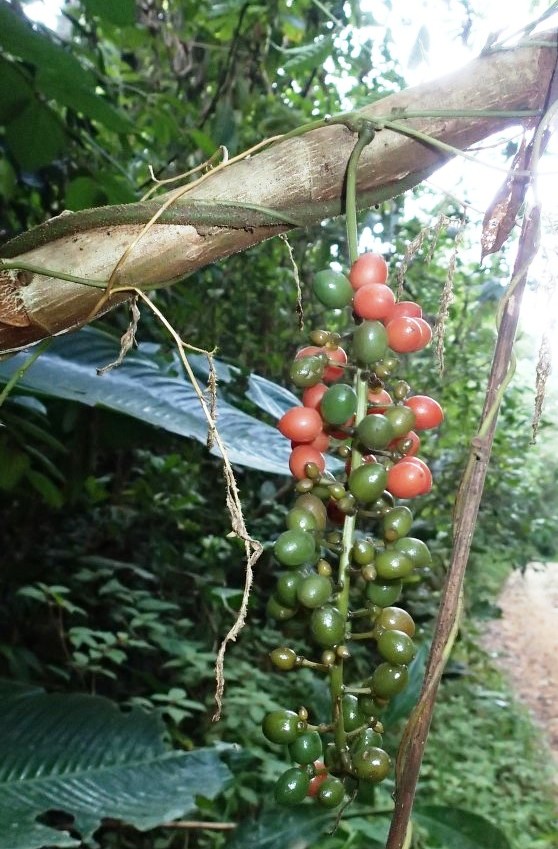
|
|
Dioscoreophyllum cumminsii Common Names: Serendipity Berry, Sweet Prayer Plant,
Guinea Potato Scientific
Classification Kingdom: Plantae Clade: Tracheophytes Clade: Angiosperms Clade: Eudicots Order: Ranunculales Family: Menispermaceae Genus: Dioscoreophyllum Species: D. cumminsii Binomial Name: Dioscoreophyllum
cumminsii (Stapf) Diels Synonyms: Dioscoreophyllum
chirindense Swynn., Dioscoreophyllum
jollyanum Pierre ex
Diels, Dioscoreophyllum klaineanum Pierre ex Diels, Dioscoreophyllum lobatum (C.H.Wright) Diels, Dioscoreophyllum
strigosum Engl., Rhopalandria cumminsii Stapf, Rhopalandria lobata C.H.Wright Morphological Description Dioscoreophyllum cumminsii is a dioecious, perennial climbing vine, growing 1.5–3 m
long, with a scrambling habit over ground or other vegetation. Key features
include: · Stem: Slender, hairy, becoming woody with age, 2–5 mm thick,
twining into shrubs · Leaves: Alternate, ovate to lanceolate, 5–12 cm long, 3–6 cm wide,
hairy beneath, dark green · Flowers: Small, greenish-yellow, in panicles, blooming
September–October · Fruit: Red berries, ellipsoid, 1–2 cm long, ripening
October–November, sweet pulp · Tubers: Cylindrical, 2–3 cm diameter, 10–20 cm long, edible when
cooked The plant dies back
aerially in the dry season (November–December), regrowing from tubers (Burkill,
1997). Distribution and Habitat Dioscoreophyllum cumminsii is native to tropical West and Central Africa, thriving in: · Regions: Lowland rainforests, forest edges, secondary growth · Countries: Nigeria, Ghana, Cameroon, Gabon, Congo, Sierra Leone · Climate: Humid tropical, 25–35°C, rainfall 1,500–3,000 mm annually · Soil: Rich, well-drained, loamy, often in shaded understory · Elevation: Sea level to 700 m Ethnopharmacology Dioscoreophyllum cumminsii is used in West African traditional medicine, with studies
validating some claims: · Diabetes: Leaf extract in Nigeria manages blood sugar; reduces glucose
in rats (72% at 200 mg/kg) (Oloyede et al., 2015). · Obesity: Leaves in Ghana treat obesity; lowers body weight in HFD
rats (p < 0.05) (Ibitoye et al., 2017). · Tonic/Debility: Root decoction in Nigeria boosts energy;
enhances stamina in folk use (Burkill, 1997). · Antioxidant: Leaf extract scavenges radicals (IC₅₀ 20 µg/mL), used for
oxidative stress (Ajiboye et al., 2016). · Anti-inflammatory: Leaves reduce TNF-α, IL-6 in rats (40% at
400 mg/kg), used for inflammation (Ibitoye et al., 2017). Its primary fame,
however, lies in monellin, a sweetener with medicinal potential. ⚠ Toxicity Profile: No significant toxicity reported; leaf extract LD₅₀ > 5,000
mg/kg in rats (safe orally). Unripe berries may cause mild GI upset. Limited
pregnancy data (Oloyede et al., 2015). Additional Uses · Culinary: Cooked tubers as famine food; berries eaten fresh or juiced · Sweetener: Monellin for low-calorie diets, stable at 100°C · Economic: Potential for commercial monellin production; Ghanaian
cultivation trials · Cultural: Berries in rituals symbolizing abundance References
External Links
More Pictures |
|
| Compounds of Dioscoreophyllum cumminsii | |
| References |