Cissus populnea
|
|
Cissus populnea Common Names: Okoho (Idoma, Igala, Igbo), Ogbolo or
Ajara (Yoruba); Dafaaraa, Labla, Labta, Layyata, Loda, Malaiduwa, Latutuwa(Hausa) Scientific
Classification Kingdom: Plantae Clade: Tracheophyta Class: Magnoliopsida Order: Vitales Family: Vitaceae Genus: Cissus Species: C. populnea Synonyms: Vitis
populnea (Guill. & Perr.) Miq., Cissus populnea var. kottoensis Desc. Morphological Description Cissus populnea is a
climbing shrub or liana, typically 3–4.5 m long, occasionally reaching 6 m with
support. Key features include: · Stems: Fleshy, ferruginous pubescent or glabrescent when young,
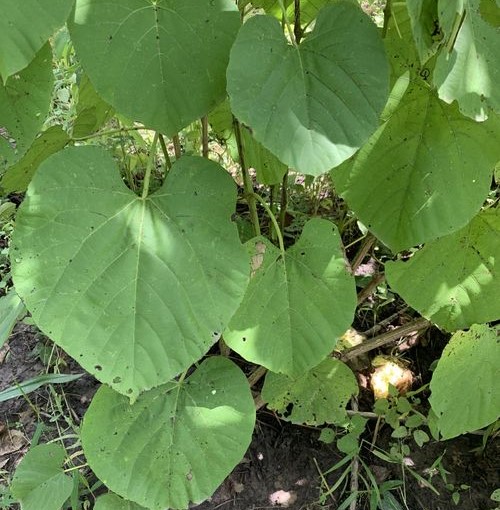
becoming glabrous; tendrils simple, aiding climbing; yields edible gum · Leaves: Simple, broadly ovate to oblong, 2.5–17 cm long, 2–17 cm
wide; distantly minutely toothed margins; acuminate apex, cordate base; dark
green above, paler beneath · Flowers: Cream to yellowish, 3–5 mm across, in axillary cymes;
4-merous, pubescent; blooming in rainy seasons · Fruit: Ellipsoid to oblong berry, 2–2.5 cm long, 1–1.5 cm wide;
green turning blackish-purple, yellow, or red when ripe; contains 1–2 seeds;
dispersed by birds Regeneration occurs via
seeds or stem cuttings, with rapid growth in disturbed areas (Soladoye &
Chukwuma, 2012). Distribution and Habitat Cissus populnea is
native to West and Central Africa, from Senegal to southern Nigeria, Cameroon,
Central African Republic, Sudan, Ethiopia, and Uganda. It thrives in: · Habitats: Savannas, open woodlands, forest edges, and riverine
thickets at 0–1,200 m elevation · Ecological Conditions: Seasonally dry tropical biomes with
800–1,800 mm annual rainfall, temperatures of 22–34°C, and sandy to loamy soils
(pH 5.5–7.5) · Range in Nigeria: Common in southern (Yoruba: Orogbolo) and
central (Idoma: Okoho) regions, used for food and medicine (Adebowale et al.,
2013) Ethnopharmacology Cissus populnea is a West African medicinal plant commonly used
in traditional practice to treat male infertility, skin and wound infections,
venereal diseases, digestive issues, and as a food thickener. Scientific
studies support several of its traditional uses, showing that extracts of the
plant possess antioxidant, anti-inflammatory, antimicrobial, and
reproductive-enhancing effects, largely due to the presence of flavonoids,
phenolics, saponins, and other bioactive compounds. Research also indicates
potential benefits in protecting organs from oxidative damage and supporting
metabolic health; however, most findings are from laboratory and animal
studies, and there is limited clinical evidence in humans · Antioxidant: Stem bark aqueous extract scavenges DPPH (EC₅₀ 0.027 mg/mL)
and inhibits Fe²⁺-induced lipid peroxidation (EC₅₀ 0.027 mg/mL) in rat testes,
attributed to carotenoids, triterpenoids, and ascorbic acid, supporting use for
oxidative stress-related conditions (Seun, 2013). · Antimicrobial: Stem ethanol extract shows MIC of 12.5–25 µg/cm³ against
MRSA, E. coli, and Candida albicans, linked to alkaloids (49.8% in stem) and
flavonoids (15.4%), validating use for wounds, boils, and urinary tract
infections (Soladoye & Chukwuma, 2012). · Antidiabetic: Leaf extract reduces blood glucose by 20–30% in
alloxan-induced diabetic rats at 500 mg/kg, due to flavonoids and saponins,
supporting use for diabetes (Rotimi et al., 2023). · Fertility Enhancement: Root extract (10.09% citation among
herbalists) enhances spermatogenesis and mitigates lead-induced testicular
toxicity in rats (sperm count improved by 40% at 1,000 mg/kg), validating use
for male infertility (Agbodjento et al., 2020; Momodu et al., 2024). · Anti-inflammatory and Wound Healing: Leaf is use for sore breasts and skin
diseases. · Antiparasitic: Root decoctions is use for intestinal parasites. · Hepatoprotective: Stem extract reduces liver enzymes
(ALT/AST) by 30% in CCl₄-induced rats at 400 mg/kg, validating use for
indigestion and general diseases (Rotimi et al., 2023). Phytochemical analyses
reveal high alkaloid (49.8% stem, 26.7% root), flavonoid (15.4% stem, 39.5%
root), saponin (12.8% stem, 10.5% root), and tannin (11.6% stem, 11.3% root)
content, with cardiac glycosides and phytosteroids in trace amounts.
Bis-(2-ethyloctyl)-phthalate and stigmasterol/β-sitosterol mixtures were
recently identified (Soladoye & Chukwuma, 2012; Rotimi et al., 2023). ⚠ Toxicity Profile: No significant toxic effects are reported for Cissus populnea at
traditional doses. Acute toxicity studies show no mortality in rats at 5,000
mg/kg, with mild sedation at high doses (2,000 mg/kg). Subchronic use (1,000
mg/kg, 28 days) may increase liver enzymes (ALT/AST by 10–15%), suggesting
caution in prolonged use. Anti-nutrients (oxalates 12.4 mg/g, trypsin
inhibitors 13.1 mg/g) are below toxic thresholds. Pregnant women, children, and
individuals with liver conditions should consult practitioners due to limited
long-term safety data (Adebowale et al., 2013; Soladoye & Chukwuma, 2012). Additional Uses · Nutritional: Stem flour is rich in carbohydrates (43.7–48.1 g/100 g),
potassium (>1,000 mg/100 g), calcium (821–905 mg/100 g), and protein (10–12
g/100 g), used as a soup thickener (okoho soup) in Nigeria (Adebowale et al.,
2013). · Gum Production: Stem yields edible gum (38.3–40.4 g/100
g), used in food and traditional medicine, with potential as a commercial
emulsifier (Adebowale et al., 2013). · Cultural: Used in Yoruba rituals to ward off calamity and as a
hunter’s charm in Senegal; symbolizes fertility in Idoma traditions (Agbodjento
et al., 2020). · Ecological: Stabilizes soils in savannas and supports pollinators (bees)
and seed dispersers (birds), but can become invasive in disturbed areas (Kew
Science, n.d.). References
External Links More Pictures
|
|
| Compounds of Cissus populnea | |
| References |
