Balanites aegyptiaca
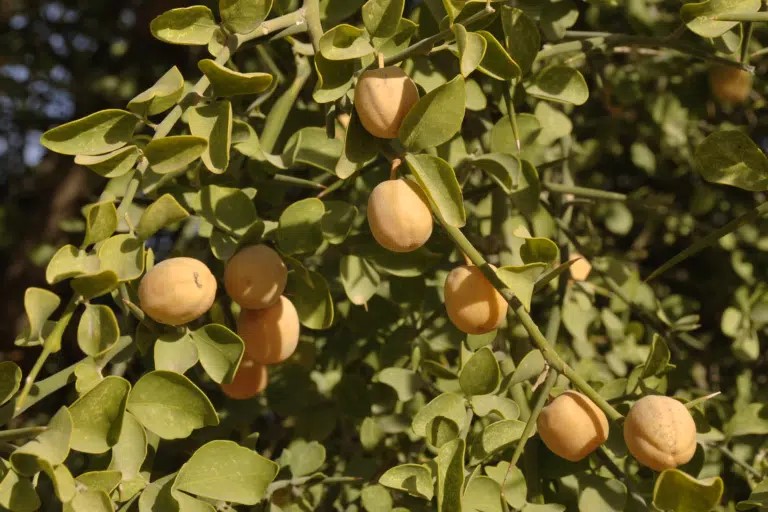
|
|
Balanites aegyptiaca Common Names: Desert date, soapberry tree Scientific
Classification Kingdom: Plantae Clade: Tracheophytes Clade: Angiosperms Clade: Eudicots Order: Zygophyllales Family: Zygophyllaceae Genus: Balanites Species: Balanites aegyptiaca (L.) Delile Conservation Status: Least Concern (LC) (Plants of the World Online, n.d.). Synonyms (selected): Agialid aegyptiaca (L.) Kuntze; Ximenia aegyptiaca L. (Plants of the World Online, n.d.;
Wikipedia contributors, n.d.). Morphological Description Balanites aegyptiaca is a spiny shrub or small to medium-sized tree that is
highly variable across its range and ecological settings. World Flora Online
describes it as semi-evergreen or sometimes deciduous, commonly spiny, and
typically reaching about 12 m (occasionally up to 15 m) (World Flora Online,
n.d.). In dryland floras and ecology syntheses, the species is frequently
characterized as deep-rooted and drought-hardy, traits linked to its
persistence in arid and semi-arid landscapes (Hall & Walker, 1992; Murthy
et al., 2020). · Spines: Strong axillary spines, an important anti-herbivory trait in
rangelands (Hall & Walker, 1992). · Leaves: Typically bifoliolate with two leathery leaflets (Plants of
the World Online, n.d.). · Flowers: Small, greenish-yellow; flowering and fruiting may vary with
rainfall and site conditions (Hall & Walker, 1992). · Fruit: Ellipsoid drupe-like fruit that ripens yellow-brown; pulp
surrounds a hard woody endocarp (Plants of the World Online, n.d.). · Key bioactive location: Steroidal saponins (including diosgenyl-type
saponins) are widely reported, especially from kernels and other tissues, and
are linked to multiple biological activities (Chothani & Vaghasiya, 2011;
Gnoula et al., 2008; Murthy et al., 2020). Distribution and Habitat Plants of the World Online
summarizes the native range as Africa and Israel to the Arabian Peninsula,
reflecting a broad arid-zone distribution (Plants of the World Online, n.d.).
Ecological work describing it as a multipurpose dryland tree emphasizes its
wide geographic spread and broad ecological amplitude across desert margins,
Sahelian zones, and dry savannas (Hall & Walker, 1992). · Native range: Africa and Israel to the Arabian Peninsula (Plants of the
World Online, n.d.). · Habitats: Desert and dry shrubland biomes, Sahel and semi-arid
woodlands; commonly on poor or sandy soils and drought-prone sites (Plants of
the World Online, n.d.; Hall & Walker, 1992). · Dryland livelihood importance: Frequently integrated into agroforestry
and household economies through fruits, oil, and multiple non-food uses (Hall
& Walker, 1992; Murthy et al., 2020). Ethnopharmacology Ethnomedicinal reports
across the Sahel, Saharan fringe, and parts of East Africa describe use of
fruit pulp, kernels, leaves, bark, and roots for gastrointestinal disturbances
(including diarrhea and dysentery), intestinal helminths, jaundice and liver
complaints, wounds and skin problems, fever and malaria-like syndromes, and
broader “general remedy” roles (Chothani & Vaghasiya, 2011; Murthy et al.,
2020). Modern reviews emphasize that biological activity varies by plant part
and extraction method, and that saponins and phenolic compounds are major
contributors to reported effects (Chothani & Vaghasiya, 2011; Murthy et
al., 2020). · Fruit aqueous extract in diabetic rats: In an alloxan-induced diabetic rat model,
an aqueous fruit extract lowered plasma glucose and improved body-weight
outcomes compared with diabetic controls, supporting traditional
metabolic-health use patterns (Baragob et al., 2014). · Fruits and seeds aqueous extracts with
mechanistic endpoints: A
controlled study in NA/STZ-induced diabetic rats reported antihyperglycemic and
antihyperlipidemic effects of fruit and seed aqueous extracts, alongside
improved pancreatic islet architecture and increased insulin-related measures,
consistent with multi-pathway metabolic modulation (Zaky et al., 2022). · Evidence synthesis: A 2025 review compiling experimental
studies reports that multiple animal models show reduced blood glucose and
improved lipid markers after treatment with B. aegyptiaca extracts, while noting that human clinical
trials remain comparatively limited (Odeniran et al., 2025). · Schistosomiasis vector control (snails and
cercariae): A laboratory study
found that aqueous extracts showed molluscicidal activity against
intermediate-host snails and cercariacidal activity against Schistosoma mansoni cercariae, supporting investigation for
botanical public-health tools and aligning with known saponin bioactivity
(Molla et al., 2013). · Traditional gastrointestinal parasitosis : in Burkina Faso it is used for anthelmintic activity. · Seed extracts against Plasmodium falciparum: An in vitro and in vivo study of seed-derived extracts
reported growth inhibition against chloroquine-susceptible P. falciparum NF54 and examined enzyme-relevant activity
related to plasmodial aminopeptidase targets, strengthening the evidence base
for malaria-associated ethnomedicinal use (Kusch et al., 2011). · Wound pathogens and resistant isolates: A study on hydroethanolic bark extracts
evaluated activity against resistant bacteria isolated from wounds and assessed
antioxidant properties, providing experimental support for ethnomedicinal wound
and skin indications (Anani et al., 2015). · Fruit methanolic extract: A 2022 study characterized methanolic
fruit extract phytochemicals and reported antimicrobial testing and
cytotoxicity screening across cancer cell lines compared with normal cells,
illustrating both therapeutic potential and the need for careful safety framing
with concentrated extracts (Ibrahim et al., 2022). · Purified steroidal saponins (kernels): A well-cited study reported strong
anticancer activity for a mixture of diosgenyl saponins (balanitin-6 and
balanitin-7) isolated from kernels, with potent effects in cancer models and
both in vitro and in vivo evaluation (Gnoula et al., 2008). · Interpretation for traditional use: Reviews caution that cytotoxic potency can
support drug-lead discovery but also underscores the importance of dosage,
preparation, and toxicology when moving from traditional preparations to
concentrated extracts (Murthy et al., 2020). · Leaf extract antioxidant and toxicology package: A 2023 study reported antioxidant activity
(including DPPH and FRAP-related endpoints) and assessed acute and subacute
toxicity in rats for multiple leaf extracts, contributing to safety and
bioactivity interpretation for medicinal use (Herald Open Access, 2023). · Analgesic and anti-inflammatory models: An experimental animal study reported that
ethanolic and petroleum ether extracts reduced carrageenan-induced paw edema
and showed analgesic effects in standard models, supporting pain and
inflammation-related ethnomedical use (Gaur et al., 2008). ⚠ Safety and Toxicity: Balanites aegyptiaca contains biologically active steroidal
saponins that can be strongly bioactive. This is relevant for both therapeutic potential
and safety boundaries, especially for concentrated extracts and isolated
compounds (Gnoula et al., 2008; Murthy et al., 2020). A 2023 rat study reported
no overt harm under its acute and subacute study conditions for tested leaf
extracts while also documenting antioxidant activity, but emphasized
laboratory-dose context (Herald Open Access, 2023).. Additional Uses · Food and nutrition: Fruits and kernels are consumed in several
regions; multiple reviews describe edible uses and nutrient contributions
alongside medicinal roles (Murthy et al., 2020). · Seed oil and soaps: The “soapberry tree” name reflects
saponin-rich tissues and traditional applications in cleansing and household
uses (Chothani & Vaghasiya, 2011). · Agroforestry and resilience: Ecological literature highlights its value
in dryland livelihoods and land-use systems due to drought tolerance and
multipurpose outputs (Hall & Walker, 1992). References
External Links
More Pictures
|
|
| Compounds of Balanites aegyptiaca | |
| References |
